




Sustainable Landscape Practices in Sonoma County: Irrigation Controllers
Key Takeaways
- Smart irrigation controllers are the central hub of sustainable water management in your landscape.
- WIFI-enabled controllers automatically adjust watering based on real-time weather data, reducing waste.
- Upgrading from a manual timer to a weather-based controller can significantly improve water efficiency in Sonoma County.
- Proper programming matters — divide watering across multiple days and cycles to reduce runoff.
- Schedule irrigation between 11 PM and 7 AM to minimize evaporation.
- Even advanced controllers require correct setup, accurate weather station data, and properly configured rainfall triggers.
Optimizing your irrigation controller is one of the most impactful steps you can take to improve the sustainability of your landscape.
While native plants, bioswales, and permeable hardscapes often get the spotlight in sustainable design, irrigation controllers are the true command center behind water use in your landscape. You can implement every best practice in sustainable landscaping, but without proper irrigation control and programming, water management — one of the core tenets of sustainability — falls short.
In Sonoma County’s dry summers and water-conscious environment, your irrigation controller plays a critical role in conserving resources while keeping your landscape healthy.
Why Irrigation Controllers Matter for Sustainability
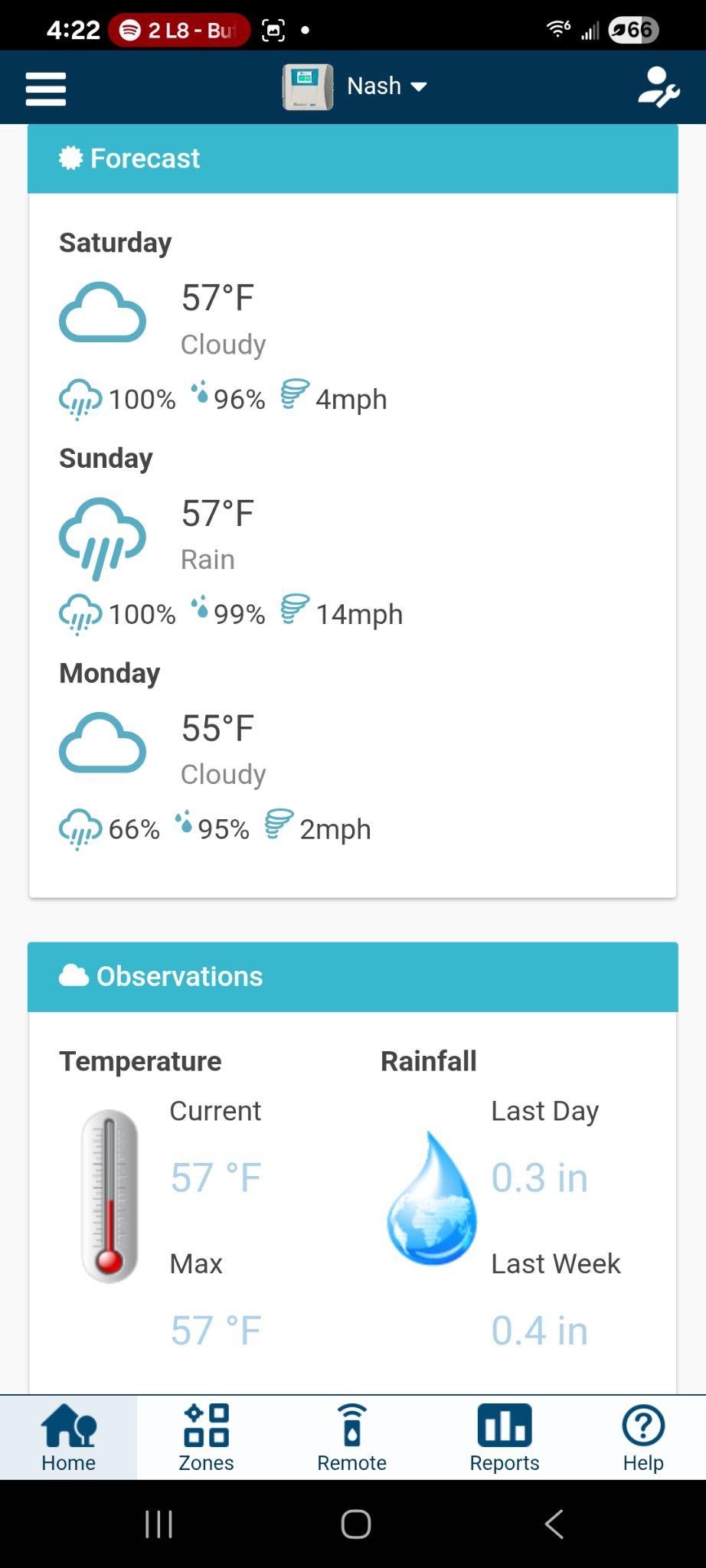
Modern WIFI-enabled irrigation controllers use real-time weather data to automatically adjust watering schedules. Instead of relying on fixed timers, they respond to rainfall, temperature, and evapotranspiration rates.
Key sustainability benefits include:
- Automatic watering adjustments during rain events
- Reduced overwatering during cooler periods
- Improved water budgeting
- Healthier root systems through precise scheduling
Even with advanced technology, thoughtful programming is essential. Applying too much water can cause runoff, root rot, and plant stress. Applying too little water leads to decline and costly replacements. Sustainability depends on balance.
Should You Upgrade Your Irrigation Controller?
If your current controller is not WIFI-enabled, upgrading your irrigation controller is one of the fastest ways to improve landscape sustainability.
Older controllers operate on static schedules and cannot adapt to real-time weather conditions. In a climate like Sonoma County’s, where rainfall patterns vary seasonally, this often results in unnecessary water use.
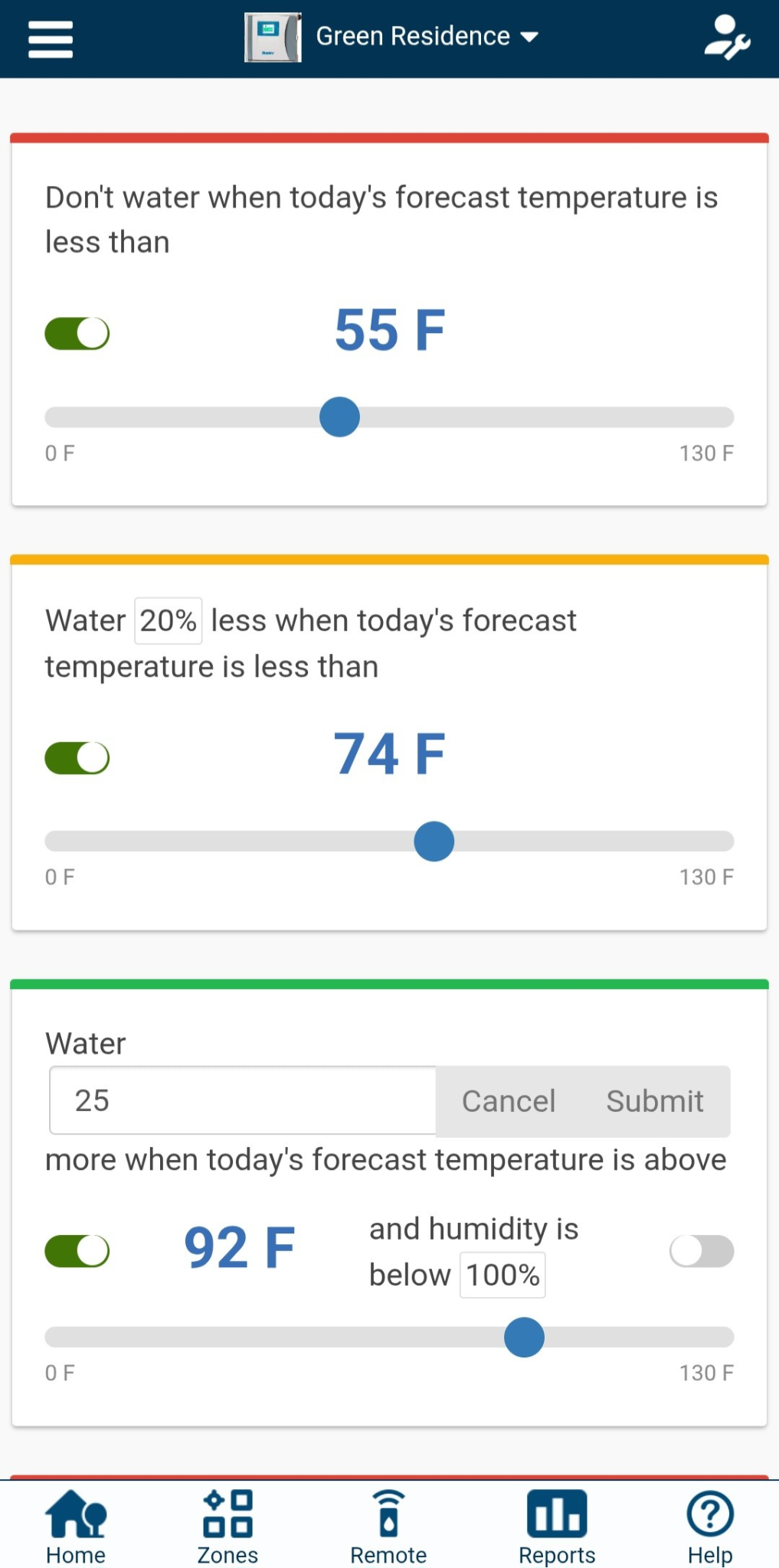
Controllers like the Hunter Hydrawise provide:
- Forecast-based watering adjustments
- Rainfall skip features
- Customizable weather triggers
- Remote monitoring from your smartphone
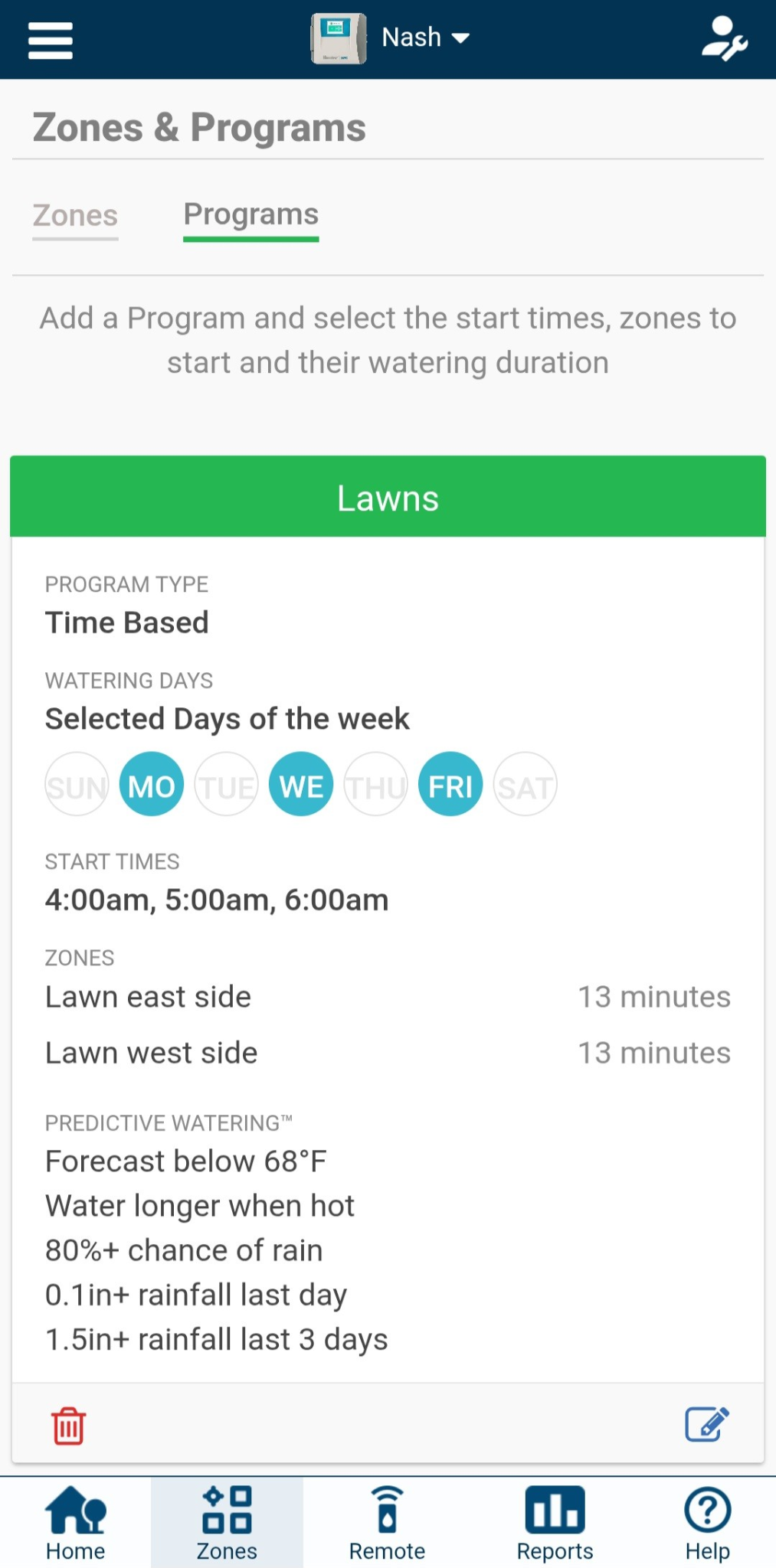
For example, you can program your system to skip irrigation if rainfall exceeds 0.1 inches within 24 hours or if rain probability exceeds 80%. These small adjustments significantly reduce water waste over time.
If You Already Have a WIFI-Enabled Controller
Upgrading alone is not enough. Proper configuration is critical.
1. Confirm WIFI Connectivity
No connection means no real-time weather adjustments. Check that your controller is actively connected to your network.
2. Verify Weather Station Data
Ensure your controller pulls data from the nearest local weather station. Accurate data ensures appropriate seasonal adjustments.
3. Review Weather Triggers
Check rainfall skip thresholds and forecast-based shutoffs. Conservative yet realistic trigger settings improve water efficiency without stressing plants.
Best Practices for Sustainable Irrigation Programming
Even the most advanced controller must be programmed correctly.
Follow these sustainable scheduling principles:
- Divide weekly water needs across 2–4 days
- Split each watering day into 2–3 shorter cycles
- Space cycles about one hour apart
- Schedule irrigation between 11 PM and 7 AM
Breaking irrigation into multiple cycles reduces runoff by allowing soil to absorb moisture gradually. Nighttime watering minimizes evaporation caused by daytime heat and wind.
These adjustments increase efficiency without increasing total water use — a hallmark of sustainable landscape practices.
The Central Hub of Water Management
Your irrigation controller is not just a timer — it is the decision-making center of your entire landscape’s water use. When paired with thoughtful zoning, drip irrigation, and responsible plant selection, it becomes a powerful sustainability tool.
If you are unsure whether your irrigation controller is properly configured or if an upgrade would improve efficiency, a professional evaluation can identify opportunities for immediate water savings.
Inspired Landscapes provides sustainable irrigation design, controller upgrades, and programming services throughout Sonoma County.
Call Inspired Landscapes at (707) 874-5810 to schedule a sustainable irrigation consultation today.

Owner, Inspired Landscapes LLC
Matthew Ripley is the owner of Inspired Landscapes LLC, a Healdsburg based landscape design, installation, maintenance, and irrigation firm serving Sonoma County. His work blends horticultural expertise with sustainable practices, drawing creative influence from Sierra backpacking and Sonoma winery estates to craft gardens that invite wildlife and year round color. Client testimonials highlight his design leadership on residential, estate, and winery properties across the region.