





Sustainable Landscape Practices in Sonoma County: Paved Hardscapes
Sustainable Paved Hardscapes in Sonoma County
In a previous blog, we compared aggregate and paved hardscapes and explained why aggregate surfaces can be the more sustainable option in some applications. That said, paved hardscapes still play an important role in sustainable landscape design. When chosen carefully and installed thoughtfully, a paved patio, walkway, or gathering space can deliver long-term durability, lower maintenance needs, and reliable performance for years to come through thoughtful landscape installation services in Sonoma County.
A paved hardscape becomes more sustainable when it lasts a long time, uses lower-impact installation methods, and manages stormwater responsibly. Material choice, sourcing, and drainage planning all influence the overall environmental impact of the finished space.
Key Takeaways
- Durable paved hardscapes can be sustainable because they reduce the need for frequent repairs, replacement, and additional material inputs.
- Installation method matters. Dry-set or sand-set systems are often more sustainable than mortar-set systems because they require fewer materials.
- Material choice matters too. Natural stone and concrete pavers have different sustainability profiles depending on sourcing and manufacturing.
- Runoff and drainage should always be part of the design. Sustainable paved hardscapes slow, capture, or infiltrate water whenever possible.
- Features like bioswales and dry wells can make paved areas more environmentally responsible without sacrificing function.
Are Paved Hardscapes Sustainable?
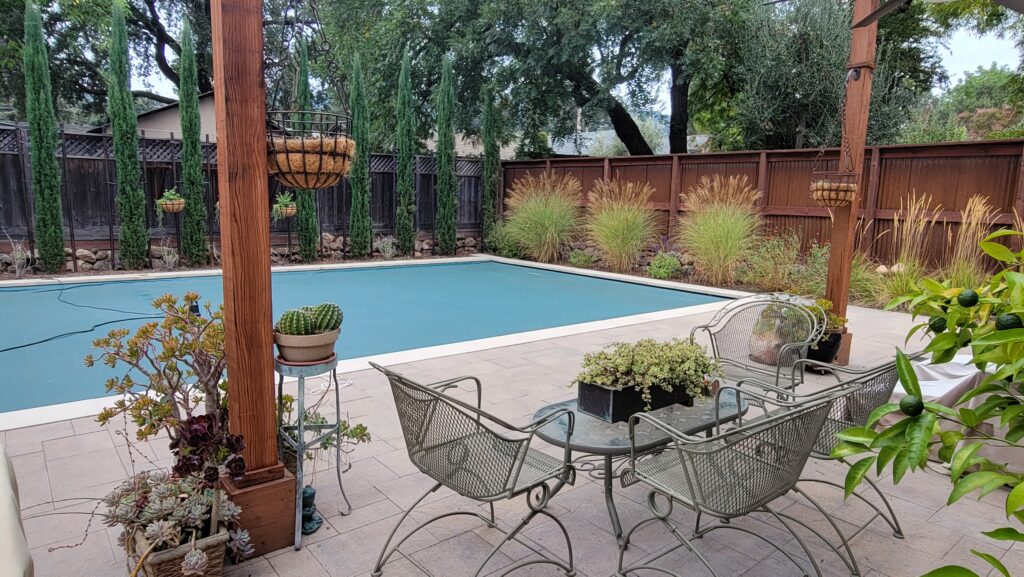
Paved hardscapes can absolutely be sustainable in the right setting. While they are generally less permeable than aggregate surfaces, they often offer superior durability for high-traffic areas, outdoor furniture, containers, and everyday use. When a hardscape holds up well over time, it reduces the labor, materials, equipment, and waste associated with repeated repairs or replacement.
That long service life is one of the biggest sustainability benefits of a well-built paved surface. A durable patio or walkway that performs well for many years can be a more responsible choice than a surface that requires frequent rebuilding.
How Does Installation Method Affect Sustainability?
Not all paved hardscape installation methods have the same environmental impact. Some construction techniques require far more materials and labor than others, which lowers their overall sustainability.
Mortar-set hardscapes are typically more material-intensive. They often require a compacted base layer, a concrete slab reinforced with rebar, a mortar bed, and then mortar-set pavers or stone on top. That process increases material use and relies heavily on concrete-based products, which carry a high manufacturing impact.
Dry-set or sand-set systems are often a more sustainable alternative. These methods can eliminate the need for concrete, mortar, and rebar altogether. When site conditions allow for it, reducing those inputs is a meaningful way to lower the environmental footprint of a paved hardscape installation.
Does Material Choice Matter?
Yes. Not all paved hardscape materials are equal from a sustainability perspective. Natural stone, concrete pavers, and other paving materials each come with different sourcing, processing, and transportation impacts.
In many cases, the most sustainable option is not just about the material itself, but also about where it comes from, how it is manufactured, and how long it will last in the intended application. A durable material that is well matched to the site can often be the better long-term choice.
Why Does Drainage Matter So Much?
Managing water runoff is one of the most important parts of sustainable hardscape design. When rainwater moves quickly across a paved surface, it can carry dirt, dust, leaves, and other debris into storm drains. That contributes to stormwater pollution and reduces the amount of water that can soak back into the landscape.
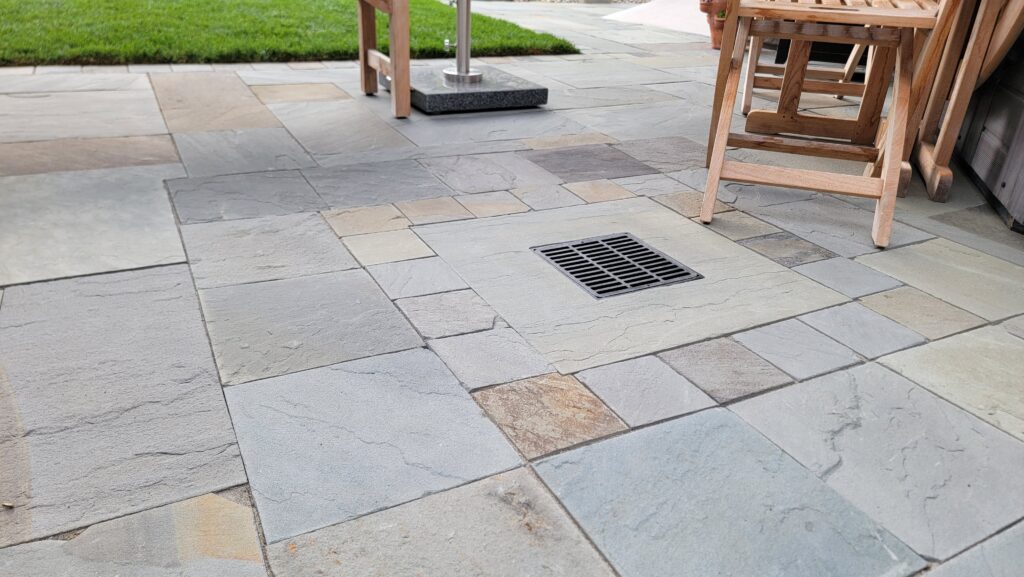
Sustainable paved hardscapes should be designed to slow water down, direct it thoughtfully, and encourage infiltration whenever possible. This is where it helps to address drainage before building a patio.
Bioswales are one effective option along the edges of paved areas. They allow runoff to settle and percolate into the soil rather than moving directly into storm drains or sewer-connected systems. Bioswales can also create opportunities for native plantings that need little or no irrigation once established.
Dry wells are another useful tool, especially for smaller hardscape areas like patios. A dry well can collect water from a drainage system and release it underground, where it can gradually infiltrate the surrounding soil. In situations with relatively low water volume, this can improve sustainability without introducing a highly visible drainage feature into the landscape. For broader site water management, Inspired Landscapes also offers landscape irrigation services.
Sustainable Hardscape Design Starts With the Right Plan
There is no single formula for building a sustainable paved hardscape. The best solution depends on how the space will be used, what materials are appropriate, how the surface will be installed, and where the water will go once it lands there.
At Inspired Landscapes, we help Sonoma County property owners design and install hardscapes that balance durability, function, and environmental responsibility. With the right material choices, installation methods, and drainage planning, paved hardscapes can absolutely be part of a more sustainable landscape.
To discuss the best approach for your property, contact Inspired Landscapes today.

Owner, Inspired Landscapes LLC
Matthew Ripley is the owner of Inspired Landscapes LLC, a Healdsburg based landscape design, installation, maintenance, and irrigation firm serving Sonoma County. His work blends horticultural expertise with sustainable practices, drawing creative influence from Sierra backpacking and Sonoma winery estates to craft gardens that invite wildlife and year round color. Client testimonials highlight his design leadership on residential, estate, and winery properties across the region.