




Sustainable Landscape Practices in Sonoma County: Spray Irrigation
Key Takeaways
- Spray irrigation can be sustainable when designed and programmed properly.
- Upgrade to efficient rotary nozzles to reduce precipitation rates and runoff.
- Use cycle-and-soak programming to allow soil absorption.
- Schedule watering during nighttime hours to reduce evaporation.
- Only use spray irrigation where it is functionally appropriate, such as lawns and broad ground cover areas.
- Pair spray systems with weather-based smart controllers for maximum efficiency.
Spray irrigation doesn’t have to conflict with sustainable landscape practices. With the right equipment, smart programming, and thoughtful plant selection, it can play a responsible role in water management.
Spray irrigation isn’t typically associated with sustainability because it is generally less efficient than drip irrigation. However, in many Sonoma County landscapes, spray irrigation is necessary — especially for lawns and certain ground covers. When properly designed, programmed, and maintained, spray systems can absolutely be part of sustainable landscape practices.
Whether you’ve inherited an older sprinkler system or have landscape elements that truly require spray irrigation, there are clear steps you can take to improve efficiency and reduce water waste.

When Spray Irrigation Makes Sense
Spray irrigation is often the best choice for:
- Turf lawns
- Broad ground cover areas
- Irregular planting gaps between hardscape
Attempting to force drip irrigation into situations where it’s not ideal can actually reduce sustainability. For example, lawns require even, overhead distribution to avoid dry patches. In these cases, efficiency comes down to equipment selection and programming, not elimination.

Not All Spray Irrigation Is Created Equal
One of the fastest ways to improve sustainability is upgrading sprinkler nozzles without replacing the entire system.
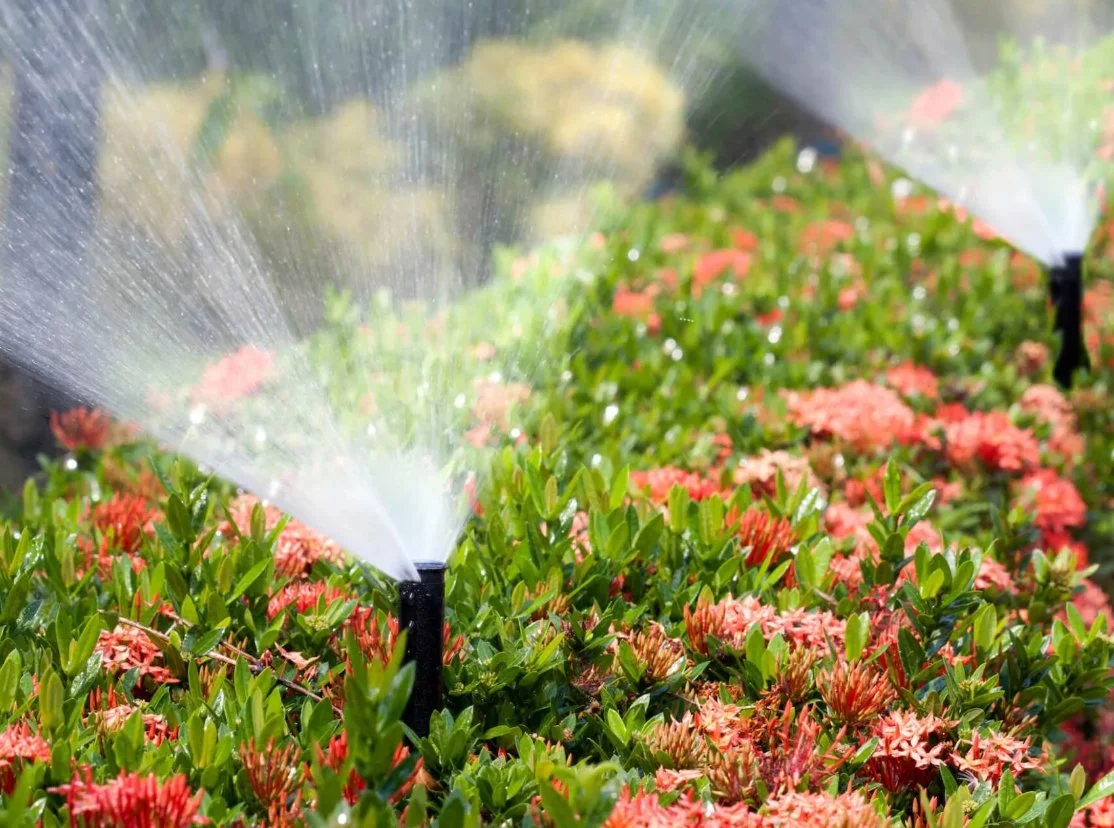
The Hunter MP Rotator is a strong example of modern nozzle technology. Unlike traditional spray heads that apply water quickly, MP Rotators distribute water more slowly and evenly. This reduced precipitation rate minimizes runoff and improves soil absorption.
In many cases, upgrading nozzles is affordable and dramatically improves performance without a full system conversion.

Fixing Runoff & Soggy Lawns
A common concern is excessive runoff:
“My lawn feels soggy after 20–30 minutes and water runs into the drain.”
This usually means irrigation cycles are too long. When sprinklers apply water faster than soil can absorb it, runoff begins within minutes.
The solution is cycle-and-soak programming:
- Divide total run time into multiple start times
- Space cycles about one hour apart
- Allow soil to absorb moisture between applications
This simple adjustment improves retention and reduces waste without reducing total irrigation effectiveness.
When Spray Is Better Than Drip
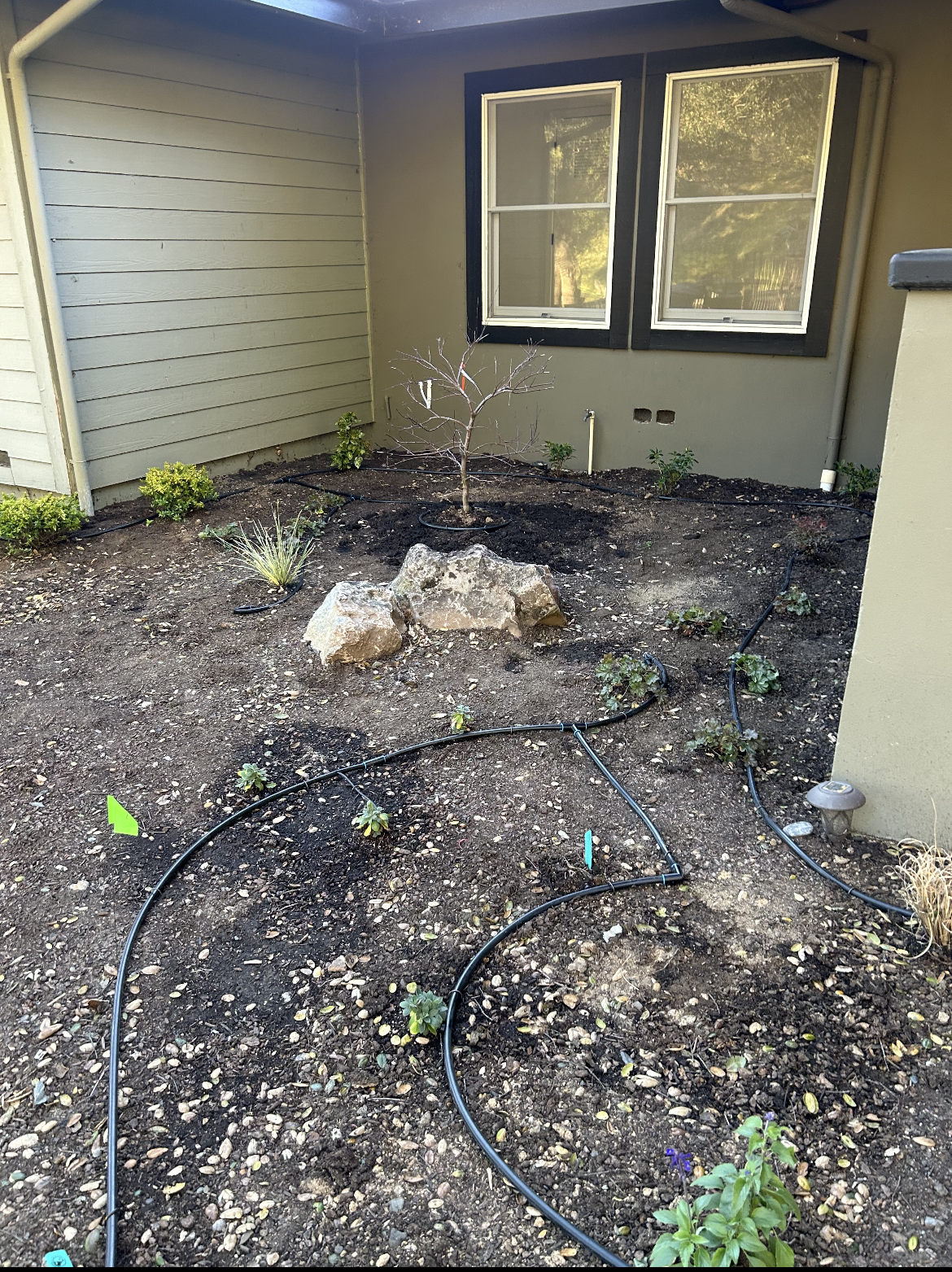
Ground covers planted between stepping stones or flagstones present challenges for drip irrigation. The irregular spacing makes emitter placement difficult, often leading to clogging or uneven coverage.
In these scenarios, short-duration spray irrigation can be more reliable and sustainable.
Plant selection also matters. Hardy, drought-tolerant ground covers such as:
- Thyme
- Dichondra
- Dymondia
Require less frequent irrigation than high-water varieties like Baby Tears. Sustainable spray irrigation always pairs proper equipment with the right plant material.
The Role of Smart Irrigation Controllers
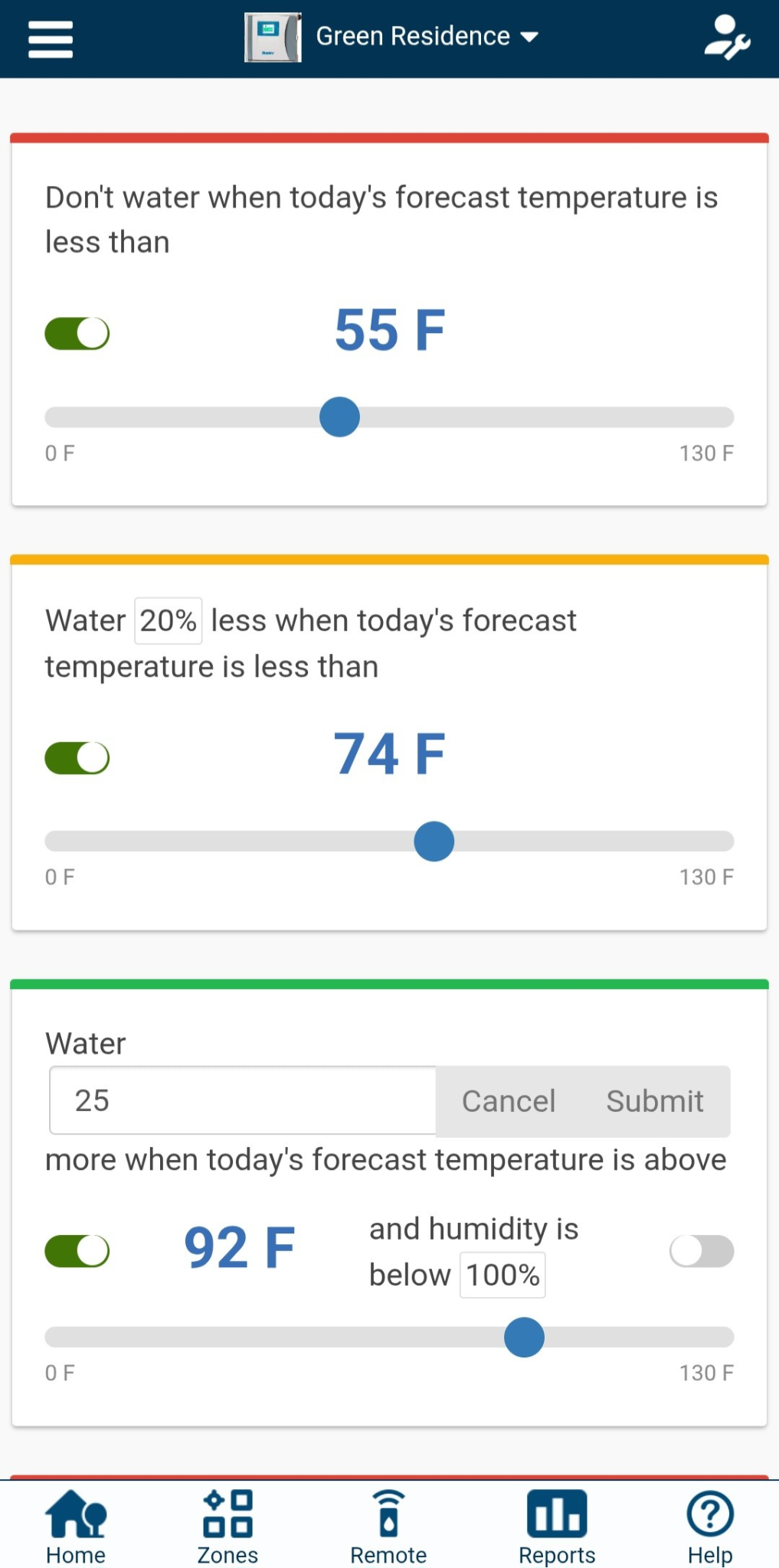
Spray irrigation efficiency depends heavily on proper irrigation controller programming. Modern weather-based controllers, such as the Hunter Hydrawise, automatically adjust watering based on rainfall and forecast data.
Key sustainability programming practices include:
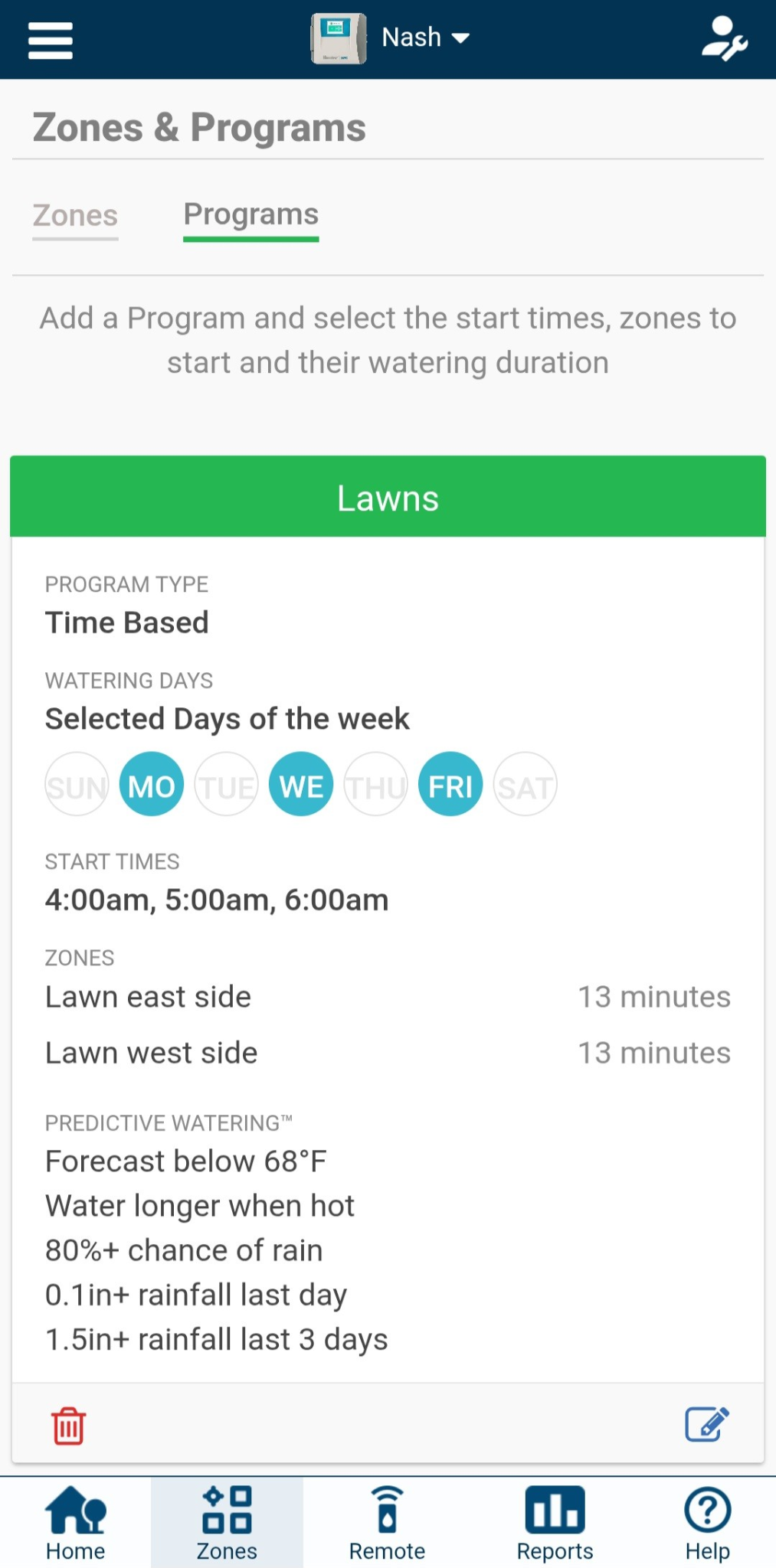
- Scheduling irrigation between 11 PM and 7 AM
- Dividing watering across 2–4 days per week
- Using multiple short cycles instead of one long run
- Setting rainfall skip triggers
Without thoughtful programming, even efficient nozzles waste water. With proper calibration, spray irrigation can perform responsibly within Sonoma County’s climate.
If you’re unsure whether your spray irrigation system is operating efficiently, Inspired Landscapes provides sustainable irrigation evaluations and upgrades throughout Sonoma County.
Call Inspired Landscapes at (707) 395-7474 to schedule a sustainable irrigation consultation today.
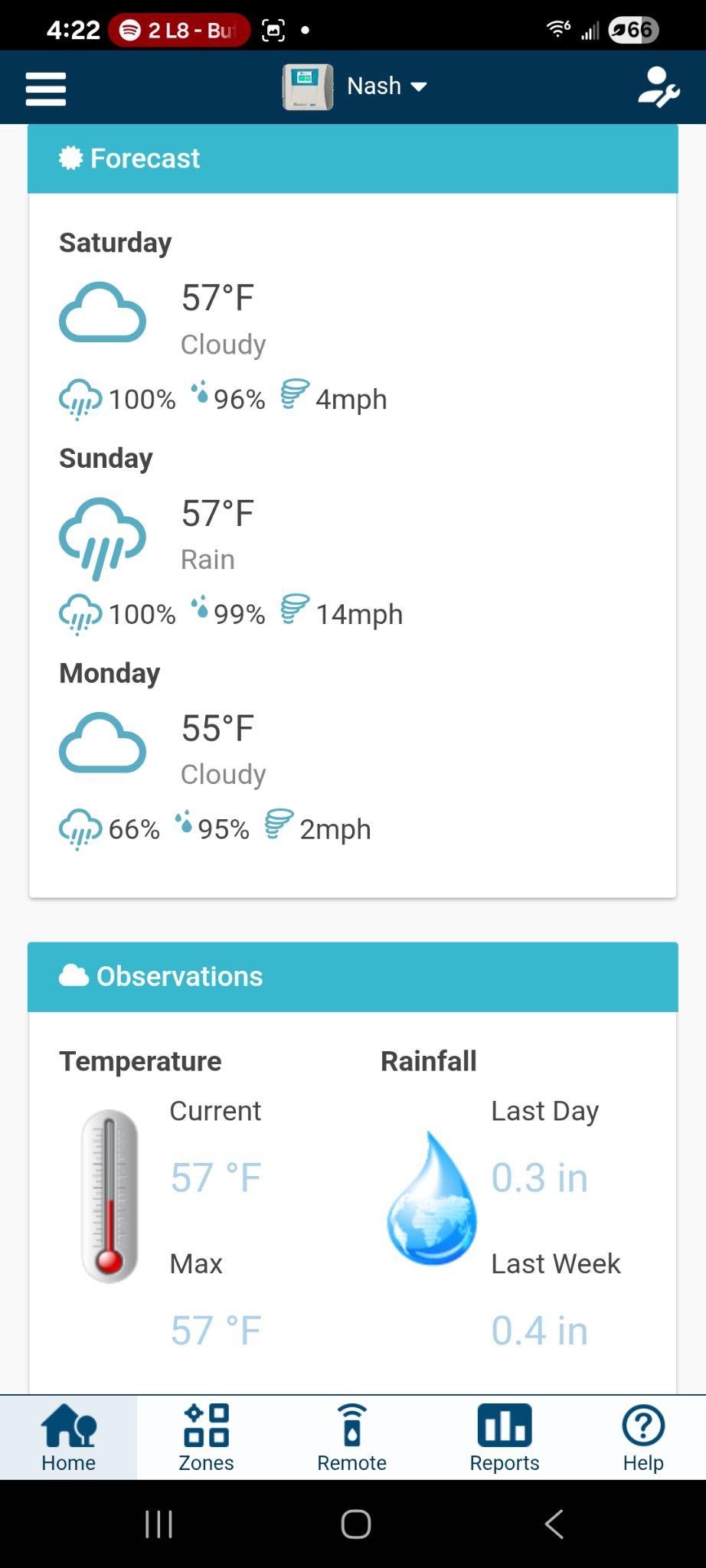
We’re going to dive into an irrigation check list to identify if your landscapes sustainability would benefit from irrigation controller upgrades or programming changes, but first here’s a handful of reasons why you should prioritize water management through an irrigation controller.
- Modern WIFI enabled weather sensing controllers can automatically adjust watering based on real time weather data to ensure the right amount of irrigation is applied at the right times to manage a water budget and keep your landscape healthy.
- Thoughtful irrigation programming is essential as how much water is applied, how frequently, and for what duration dramatically impacts sustainability, this is true even for WIFI controllers!
- Too much water is just as damaging as too little water, both can lead to damage in the landscape requiring repairs that reduce the overall sustainability of your landscape.
SHOULD YOU BE CONSIDERING AN IRRIGATION CONTROLLER UPGRADE TO IMPROVE SUSTAINABILITY?
Does your controller have up to date sustainability features like WIFI enabled weather sensing?
- Check to see if your irrigation controller is WIFI enabled. It should say so on the faceplate of the controller.
- If not, then you absolutely can improve the sustainability of your landscape by upgrading. Old controllers are limited to manual programming without being able to adjust to real time weather conditions. Call Inspired Landscapes to discuss which WIFI controller would be best suited for you, we recommend the Hunter Hydrawise controllers.
If you do have a WIFI enabled controller…
- Check to be sure your controller is properly connected to WIFI. No connection, no functionality!
- Check to be sure your controller is getting weather data from the nearest local weather station. This ensures you have the most accurate data being used for adjustments.
- Check the weather sensing parameters such as what triggers the controller to skip a cycle. Usually this is done with settings such as ‘Don’t irrigation if chance of rain is above 80% or if there has been .1 inches of rainfall in the last 24 hours’. There are a variety of parameters to work with that improve your sustainability, give Inspired Landscapes a call to configure your controller if you need help.
- Check your base programming, you should divide the total amount of water an area needs over a 2-4 days per week, and each day’s worth of water into 2-3 cycles spaced about 1 hour apart and ideally occurring in the hours between 11pm and 7am. Breaking up the irrigation cycles reduces run off by not putting too much water down all at once, keeping the water at the base of the plants. Watering during nighttime hours reduces water loss due to evaporation from heat and wind which generally have the strongest impacts in the mid-day to afternoon hours. Reducing run off and improving efficiency are hallmarks of sustainable practices within irrigation.

Owner, Inspired Landscapes LLC
Matthew Ripley is the owner of Inspired Landscapes LLC, a Healdsburg based landscape design, installation, maintenance, and irrigation firm serving Sonoma County. His work blends horticultural expertise with sustainable practices, drawing creative influence from Sierra backpacking and Sonoma winery estates to craft gardens that invite wildlife and year round color. Client testimonials highlight his design leadership on residential, estate, and winery properties across the region.