




Sustainable Landscape Practices: Aggregate Hardscapes
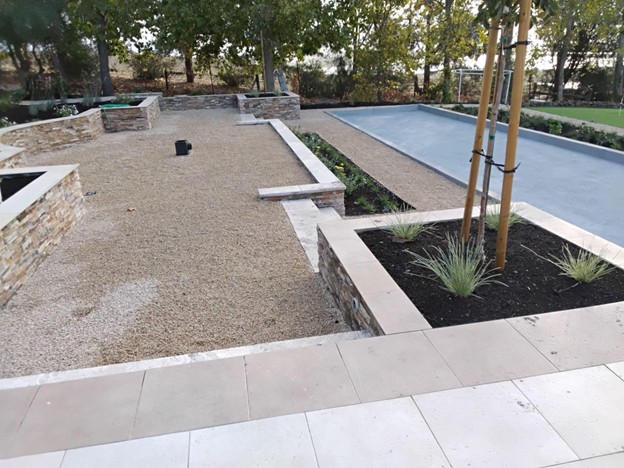
Hardscapes include pathways and patios, and while planting and irrigation often gets the spotlight for sustainability, hardscapes are the most labor, material, and equipment intensive portions of a landscape project which means they have an outsized impact on sustainability. Let’s explore how aggregate hardscapes, ones that are made of granular materials like crushed stone, gravel, pebbles, fit incredibly well into sustainable landscape design and installation.
KEY POINTS
- Aggregate hardscapes require less labor and equipment than paved alternatives.
- Aggregate hardscape materials are widely available and often locally sourced.
- Permeable aggregate hardscapes reduce runoff and increase water retention.
- Repairing aggregate hardscapes is easy, low cost, and not labor/equipment intensive.
How do aggregate landscapes compare to paved alternatives in regards to labor and equipment when considering sustainability?
Moving crushed rock and other granular materials can easily be done by hand with wheelbarrows rather than requiring concrete pumps or forklifts to move pallets of heavy pavers. The only mechanical equipment you’d need is a compactor which you’d need to use anyways in a paved landscape. Aggregate materials are more forgiving than paved surfaces so you even have the option to skip compaction or to do it by hand, although durability and longevity might be lowered as result.
If I want my hardscape materials to be locally sourced, how do aggregates compare to paved options?
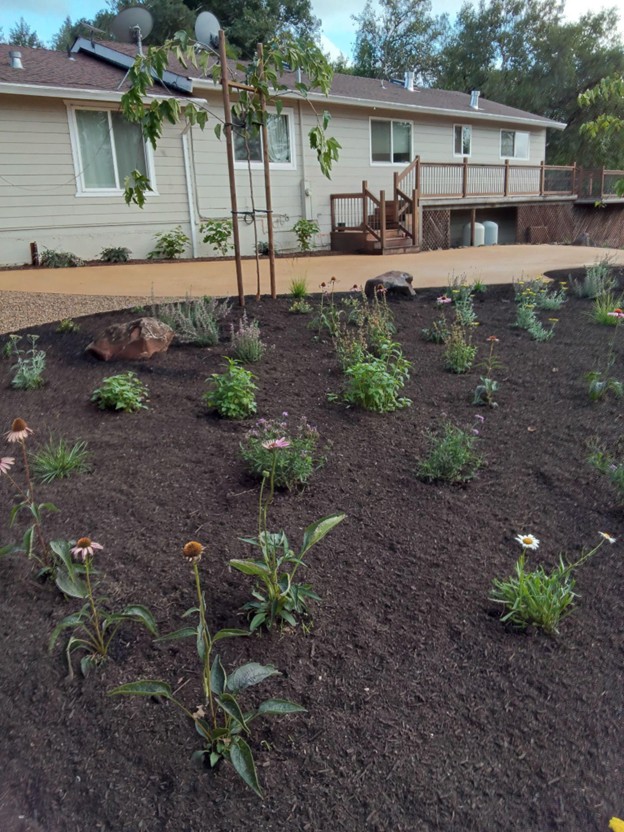
More often than not, aggregates such as crushed rock are easily found locally via quarries, or materials recycling centers. This means you can reduce the impacts of trucking, lowering emissions, compared to shipping materials from far. Some folks might get lucky and have manufacturers of paved materials locally, but even so, the inputs required to custom cut stone pavers or create pre-cast concrete pavers has far more negative impacts on sustainability than sourcing aggregates such as decomposed granite.
Once my hardscape is installed, are there sustainability benefits long term for aggregates vs. paved hardscapes?
A major consideration of sustainability is how rainfall behaves when it falls on your landscape. Most paved surfaces are impermeable, meaning rainfall runs off the area into drains, as it does this it washes dirt, dust, and other materials with it which contributes to storm water pollution. Aggregate surfaces are permeable by default of being granular which allows rainwater to pass through it and into the surrounding soil, reducing run off and increasing water retention for your plants and possibly your well if you have one.
From a sustainability perspective, are aggregate or paved surfaces easier to repair?
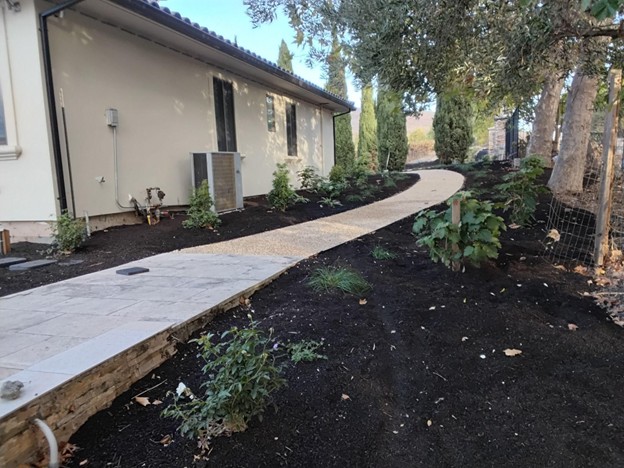
All repairs will be different, however generally aggregates are much easier to repair because replacing some loose gravel or patching decomposed granite is much easier than replacing broken concrete or paver stones. However, durability is much lower with aggregate surfaces as they are easily eroded in heavy rains or foot traffic. While paved surfaces might be more challenging to repair, they also need to be repaired less frequently. Consider using paved surfaces in high traffic areas, and aggregates in areas where durability is less of a concern.
Aggregate hardscapes can be one of the most practical ways to support sustainable landscape practices because they reduce installation intensity, support local material sourcing, and improve water infiltration across your property. If you are planning a landscape renovation in Sonoma County and want help selecting the right mix of aggregate and paved surfaces for durability, drainage, and long-term maintenance, Inspired Landscapes can help. Call (707) 395-7474 to discuss your goals and get a plan that fits your property and how you use it.

Owner, Inspired Landscapes LLC
Matthew Ripley is the owner of Inspired Landscapes LLC, a Healdsburg based landscape design, installation, maintenance, and irrigation firm serving Sonoma County. His work blends horticultural expertise with sustainable practices, drawing creative influence from Sierra backpacking and Sonoma winery estates to craft gardens that invite wildlife and year round color. Client testimonials highlight his design leadership on residential, estate, and winery properties across the region.