




Sustainable Landscape Practices: Creating Shade
Creating a cool shady area is top of mind for many of our clients who want to enjoy their outdoor environments in hot Sonoma County summers. Three popular approaches include planting trees, building a pergola, or using temporary umbrellas and each has sustainability benefits, drawbacks, and key elements to keep in mind to be sure your choices are in line with sustainable practices.
Overview
Before we dive in to our ‘pitch’ to clients about creating shade, here’s an overview:
- Utilize existing features such as large trees or buildings, position hard scapes on their northern side.
- Growing shade is more sustainable than building it, trees are the top choice!
- Building materials vary dramatically in sustainability, if you build a structure, carefully consider each input required.
Creating Shade Sustainably
Let’s roleplay this topic as if you were a client of ours planning a new landscape design. We will roll through common questions we hear, and responses we give, when speaking without clients about creating shade.
Client: I’d really like to create a shady area to read a book on summer afternoons, how would we do that sustainably?
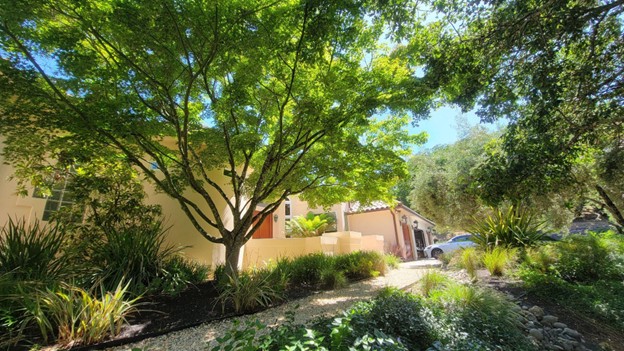
Inspired Landscapes: Finding a peaceful place to sit on a summer afternoon is a wonderful idea to enjoy your time outside. Let’s explore existing locations on your property that have shade so we can utilize those without needing to use new materials or labor inputs to create it. How about on the shadier north side of your house, or under the big Oak at the back fenceline?
Client: I like the idea of using shade we already have, that could work for a dining patio, but when I read I like to be out in the middle of the garden with the plants, and we don’t have any existing shade in those areas…
Inspired Landscapes: No worries! In that case, creating shade with trees is by far the most sustainable option because our inputs are very low in terms of materials and labor, plus it creates habitat for birds and only gets stronger over time!
Client: I’m concerned about leaves dropping and pruning creating a maintenance issue, which means less sustainability than an umbrella or pergola which require less maintenance.
Inspired Landscapes: Great thinking to reduce maintenance in order to maximize sustainability in your long term landscape maintenance. We can provide a list of evergreen trees that drop minimal leaves, as well as a list of deciduous trees that drop all their leaves in a short timespan so you only have to clean up leaves for a couple of weeks a year. To reduce pruning needs, lets select a tree whose mature size fits the space we are putting it in so you aren’t having to constantly chop it back to keep it under control.
Also keep in mind, pergolas and umbrellas aren’t maintenance free. Pergolas need to be stained and repainted to maintain longevity, umbrellas can rip in the wind or need to have mildew cleaned from them. Neither is particularly high maintenance, but compared to a tree the difference is negligible and the tree doesn’t require more inputs to repair it such as paint, wood stain, or a new umbrella.
Sustainable Pergola Design Considerations
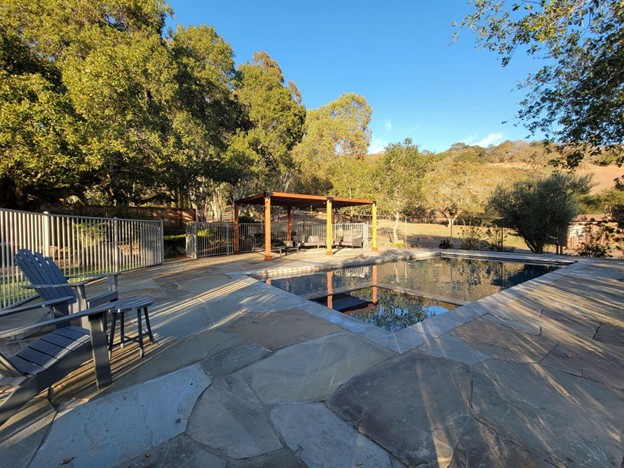
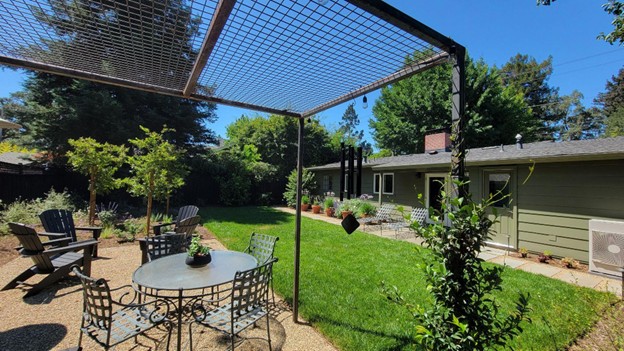
Client: For the main entertainment area, I want to build a pergola to give it personality and to be able to mount fans and lighting. How can I build this pergola sustainably?
Inspired Landscapes: Pergolas can be built of a huge range of materials including wood, metal, stone, fabrics, or a combination of elements. As with choices we make when framed with a sustainability mindset, we need to ask, “1. Is it low input in terms of labor and materials, 2. Are the materials able to be locally sourced? 3. Are the materials themselves sustainable or are we picking the most sustainable option available? 4. How durable is it, will it need repairs?”
Most pergolas are made of wood, most Cedar comes from Canada, a lot of it is old growth, meaning it’s not a very sustainable choice for Sonoma County. Looking into other options if you’re open to it is advised, we can guide you to wood products where we’ve researched the logging practices of a particular supplier to ensure they manage their forests sustainably.
Steel and metal are built for a lifetime, and while the inputs are relatively high for materials and labor, the long term maintenance is remarkably low and longevity is unmatched.
Fabrics such as canvas or decorative tarps are a quick and cost effective way to create shade, we can recommend products that match sustainability with durability. However it’s worth noting this shade option is most susceptible to damage from the elements and should be considered less permanent.
Client: These tips are fantastic, we’re grateful to have called Inspired Landscapes, you’re the sustainability experts we’ve been searching for!
Inspired Landscapes: Sustainability is the foundation that Inspired Landscapes is built upon, it’s our passion to help others implement these practices!
Creating shade is one of the most impactful ways to improve comfort and usability in your outdoor space, especially when it is guided by sustainable landscape practices. Whether you rely on existing site features, plant trees for long-term benefits, or build a structure with carefully selected materials, the right approach balances durability, maintenance, and environmental impact. If you are planning a landscape project in Sonoma County and want expert guidance rooted in sustainability, contact Inspired Landscapes at (707) 395-7474 to start designing a landscape that works naturally with your environment.

Owner, Inspired Landscapes LLC
Matthew Ripley is the owner of Inspired Landscapes LLC, a Healdsburg based landscape design, installation, maintenance, and irrigation firm serving Sonoma County. His work blends horticultural expertise with sustainable practices, drawing creative influence from Sierra backpacking and Sonoma winery estates to craft gardens that invite wildlife and year round color. Client testimonials highlight his design leadership on residential, estate, and winery properties across the region.