




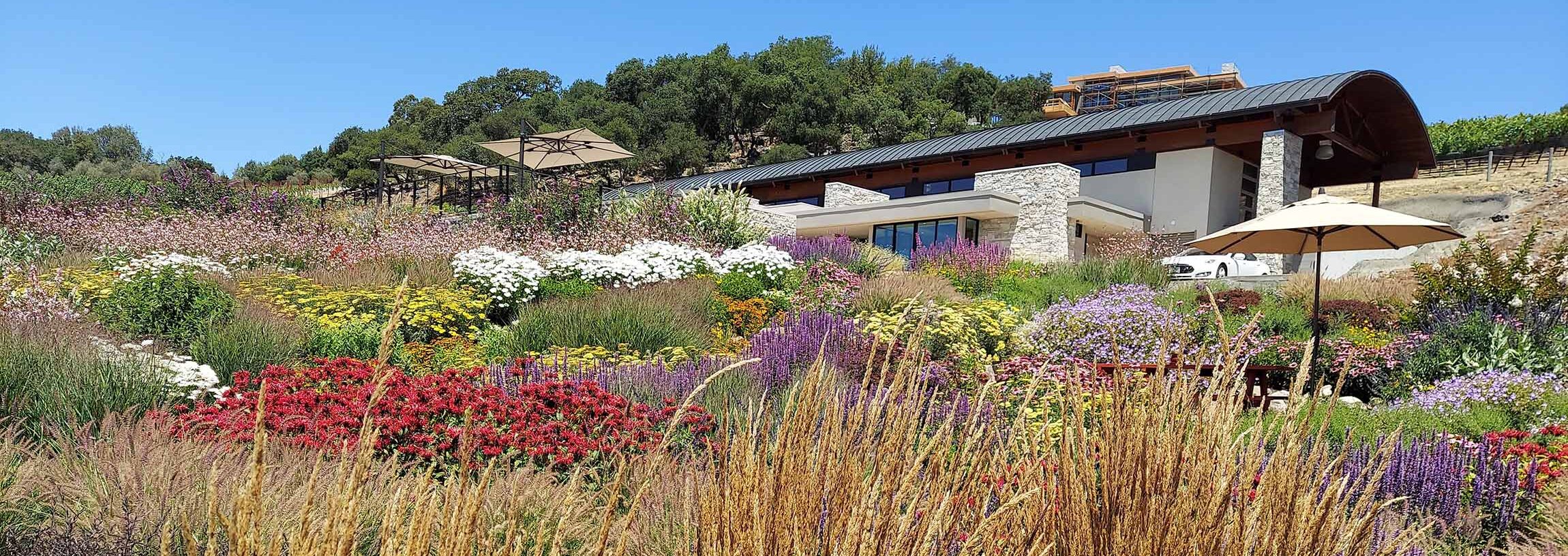
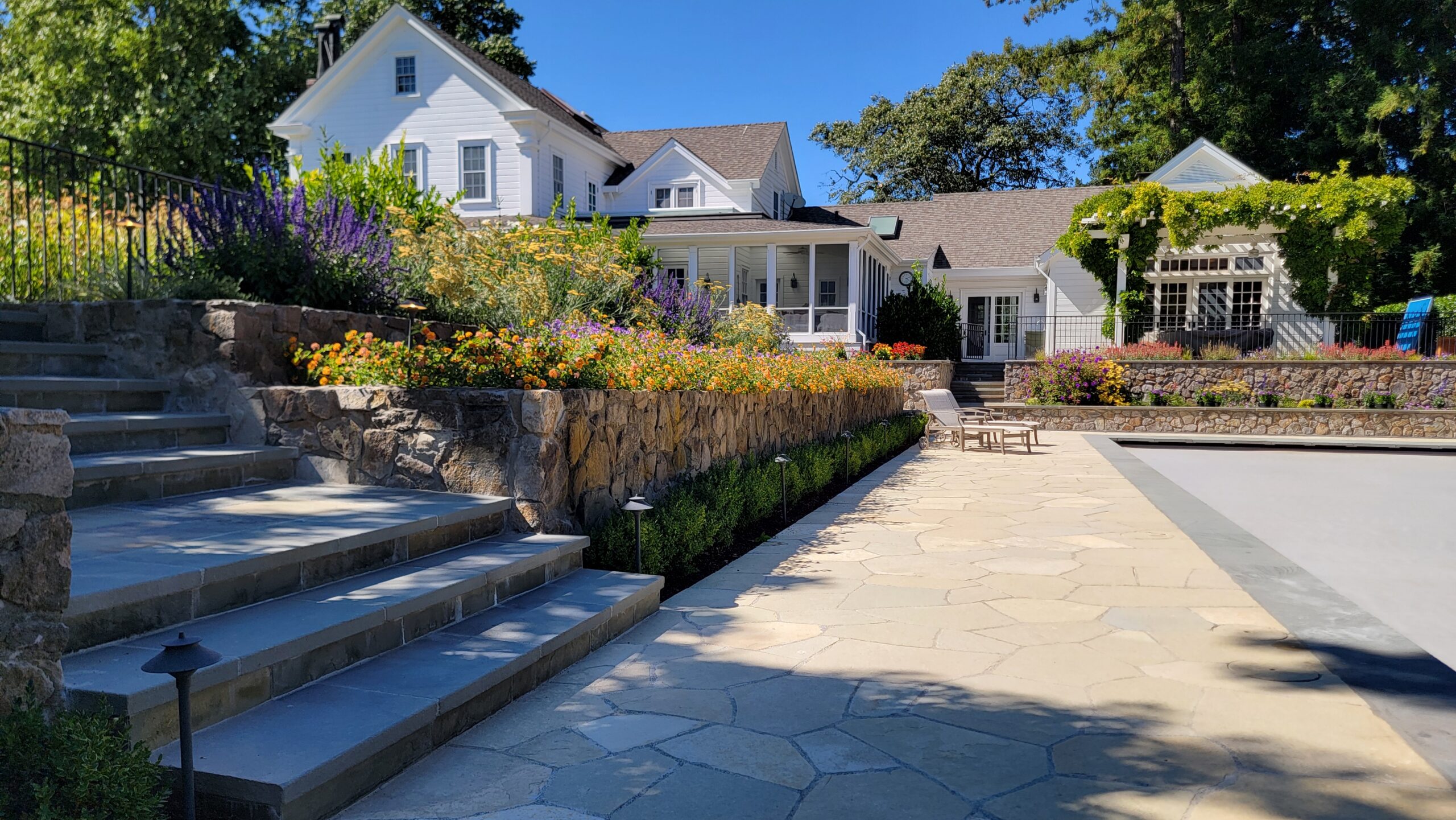
Hardscape Safety Checklist for Property Owners in Healdsburg
Your landscape should do more than make a strong first impression. It should help your property feel organized, easier to maintain, and better prepared for the realities of dry seasons and wildfire risk. If you have been searching for hardscape contractors near you in Healdsburg, you’re probably seeking practical solutions like hardscape transitions, noncombustible zones near structures, gravel and stone placement, and access paths that reduce fuel continuity while improving the way your property functions every day.
This checklist is designed to help you evaluate your landscape with those goals in mind.
Key Takeaways
- Create a clean, noncombustible zone near the home with gravel, stone, pavers, or concrete
- Use clear hardscape transitions to separate planting beds, patios, lawns, and access areas
- Place gravel and stone strategically to improve function, drainage, and visual structure
- Make sure walkways and side-yard paths are durable, accessible, and easy to maintain
- Break up continuous runs of dense or dry planting to improve organization and reduce upkeep
- Balance hardscape and planting so the landscape feels open, intentional, and manageable
- Consider a coordinated design plan when multiple problem areas affect function and appearance
-
Check the area immediately around your home
The space closest to your structure should feel intentional, clean, and easy to maintain.
Use this checklist:
- Replace combustible ground covers near the structure with noncombustible materials
- Consider gravel, stone, decomposed granite, pavers, or concrete near the house
- Remove loose debris that can collect against walls, edges, and corners
- Keep planting beds from pressing tightly against siding, vents, windows, and other vulnerable areas
- Create a clear visual transition between the home and the surrounding landscape
Why it matters to you:
- This area is one of the most important zones on the property
- A well-defined hardscape edge helps your home look more polished
- It also makes cleanup, monitoring, and seasonal maintenance easier
-
Check whether your hardscape transitions are clear or patchy
A property works better when one area flows logically into the next. Poor transitions often make a landscape feel cluttered, unfinished, or harder to maintain.
Look for these opportunities:
- Add a gravel or stone band between the house and planting beds
- Use pathways to separate lawn, patio, and planting areas
- Tie together patios, side yards, entries, and utility zones with consistent materials
- Use edging and grade changes to keep materials from blending into one another
- Make sure patios, walkways, and adjacent planting feel connected rather than random
Why it matters to you:
- Better transitions improve both function and appearance
- Defined edges help reduce messy overlaps between plants and hardscape
- A more organized layout often reduces long-term upkeep
-
Check how gravel and stone are being used
Gravel and stone should do more than fill space. They should solve problems and improve how the property performs.
Ask yourself:
- Is gravel helping create a clean noncombustible zone near the structure?
- Is stone being used to define circulation and break up planting masses?
- Are there side yards or service corridors that would benefit from a durable gravel surface?
- Are decorative rock areas helping drainage and visual structure?
- Are material choices appropriate for the style and scale of the property?
Useful applications include:
- Foundation borders
- Side-yard access routes
- Driveway shoulders
- Transitions between patio and planting
- Open areas where bark or dense groundcover would be harder to manage
Why it matters to you:
- Stone and gravel can create a cleaner, more architectural look
- They help organize busy landscapes
- They can reduce the spread of combustible material where softscape would otherwise run continuously
-
Check your access paths for daily use and emergency practicality
Paths are not only about appearance. They affect how you move through the property, how crews maintain it, and how usable the space feels year-round.
Review your access paths:
- Are primary walkways wide enough and comfortable to use?
- Are side-yard paths accessible for maintenance and equipment?
- Do paths stay clear, or do plants spill into them too quickly?
- Are the surfaces stable, durable, and appropriate for the site?
- Do routes connect important areas like entries, gates, patios, gardens, and utility spaces?
Good access planning may include:
- Gravel service paths
- Stone or paver walkways
- Defined entry routes
- Clear side-yard circulation
- Open transitions around gates and utility areas
Why it matters to you:
- Better access makes the property easier to live in and maintain
- Clear routes reduce wear on planting areas
- A more navigable site is more functional for everyday life and better organized during urgent situations
-
Check for continuous fuel lines across the property
One of the biggest design issues on residential properties is continuity. When dry lawn, bark mulch, shrubs, and tree limbs visually and physically connect, the landscape can feel overgrown and harder to manage.
Walk the property and look for:
- Long uninterrupted runs of dry or dense planting
- Shrubs massed tightly together without breaks
- Plantings that bridge from one bed to another without separation
- Layered vegetation that visually stacks from low ground cover to taller shrubs and trees
Ways to break continuity:
- Add gravel or stone breaks between planting areas
- Expand patios or landing zones where needed
- Simplify overplanted beds
- Separate shrub groupings with clear spacing
- Use pathways or retaining features to interrupt long planted runs
Why it matters to you:
- The landscape becomes easier to read and easier to maintain
- Strategic breaks create stronger visual structure
- You gain better control over how vegetation is distributed across the property
-
Check whether plants and hardscape are working together
A resilient landscape is not just less planted. It is better planned.
Evaluate the balance:
- Are plants placed with enough room from walkways and structures?
- Do hardscape elements support the planting design rather than compete with it?
- Are garden zones scaled properly to the size of the lot?
- Does the landscape feel open where it should feel open?
- Are there too many small beds creating unnecessary complexity?
Signs of a better balance:
- Hardscape defines circulation and structure
- Planting adds texture, softness, and seasonal beauty
- Open space is preserved where it improves function
- Maintenance feels manageable, not constant
Why it matters to you:
- You do not have to sacrifice beauty for practicality
- The best landscapes combine sensory appeal with strong structure
- Good design supports both enjoyment and long-term property care
-
Check whether your project needs a coordinated plan
Hardscape transitions, access, planting layout, irrigation, and long-term maintenance all influence one another. When they are handled separately, the finished result can feel disconnected.
You may need a full plan if:
- Your property has several problem areas instead of one simple fix
- Planting and hardscape decisions have been made in phases without a clear overall layout
- Side yards, entries, patios, and planting beds do not relate well to each other
- Maintenance has become more difficult over time
- You want a landscape that is both beautiful and more functional near the home
Final Property Owner Checklist
Before moving forward with improvements, ask yourself:
- Do I have a clean, durable, noncombustible zone near the house?
- Are my hardscape transitions clear and intentional?
- Is gravel or stone being used strategically?
- Are access paths practical, durable, and easy to maintain?
- Have I broken up long runs of combustible planting?
- Does my landscape feel organized as a whole?
- Would a coordinated design and installation plan save time, money, and future rework?
When these items are addressed together, your property is more than attractive. It becomes more functional, more manageable, and better aligned with the way you actually live on the site.
FAQ
What is the main purpose of hardscape improvements near the home?
Hardscape improvements help create a cleaner, more functional landscape with better-defined spaces and easier maintenance.
Why are noncombustible materials important around the house?
Materials like gravel, stone, and pavers help create a durable zone near the structure and reduce buildup of combustible debris.
How do hardscape transitions improve a property?
They make the landscape feel more organized, connect outdoor areas more clearly, and reduce messy overlaps between planting and built features.
Where can gravel or stone be used effectively?
They work well along foundation borders, side yards, driveway edges, access routes, and transitions between patios and planting beds.
Why do access paths matter?
Good paths improve daily usability, support maintenance access, and help the property feel more practical year-round.
Let’s Schedule a Property Walkthrough – Inspired Landscapes
Looking for hardscape contractors near you in Healdsburg? Want a landscape that is more functional, better organized, and thoughtfully designed around your home?
Inspired Landscapes is here to help.
Contact Inspired Landscapes today to schedule a consultation and take the next step toward a safer, more beautiful outdoor space.
📞 Call: (707) 395-7474

Owner, Inspired Landscapes LLC
Matthew Ripley is the owner of Inspired Landscapes LLC, a Healdsburg based landscape design, installation, maintenance, and irrigation firm serving Sonoma County. His work blends horticultural expertise with sustainable practices, drawing creative influence from Sierra backpacking and Sonoma winery estates to craft gardens that invite wildlife and year round color. Client testimonials highlight his design leadership on residential, estate, and winery properties across the region.