



How Mediterranean Plants Create Healthy Healdsburg Landscapes
If you own a home, manage an estate, or take care of a commercial property in Sonoma County, you already know landscaping here comes with its own set of challenges. Long dry summers. Water use concerns. Plants that look great in spring, then struggle by late summer. Lawns that take a ton of work just to stay halfway green.
That’s exactly why Mediterranean-climate landscaping makes so much sense.
Instead of trying to force a landscape to behave like it’s in some totally different climate, this approach works with the conditions we actually have. And honestly, that usually leads to better-looking landscapes, healthier plants, less water waste, and fewer maintenance headaches.
For anyone comparing professional landscapers in Healdsburg, this is one of the biggest things to pay attention to. A beautiful landscape is great, of course. But a beautiful landscape that also fits the site, supports pollinators, and doesn’t constantly fight the climate? That’s a much smarter investment.
Key Takeaways
- Mediterranean climate landscaping works with Healdsburg’s hot, dry summers and mild, wet winters.
- Native and adaptive plants help reduce water use and improve long-term plant health.
- Pollinator friendly landscapes can be both beautiful and ecologically beneficial.
- Reducing unnecessary turf lowers maintenance needs and conserves water.
- Proper plant spacing and smart irrigation improve airflow, efficiency, and landscape performance.
What Mediterranean Climate Planting Really Means
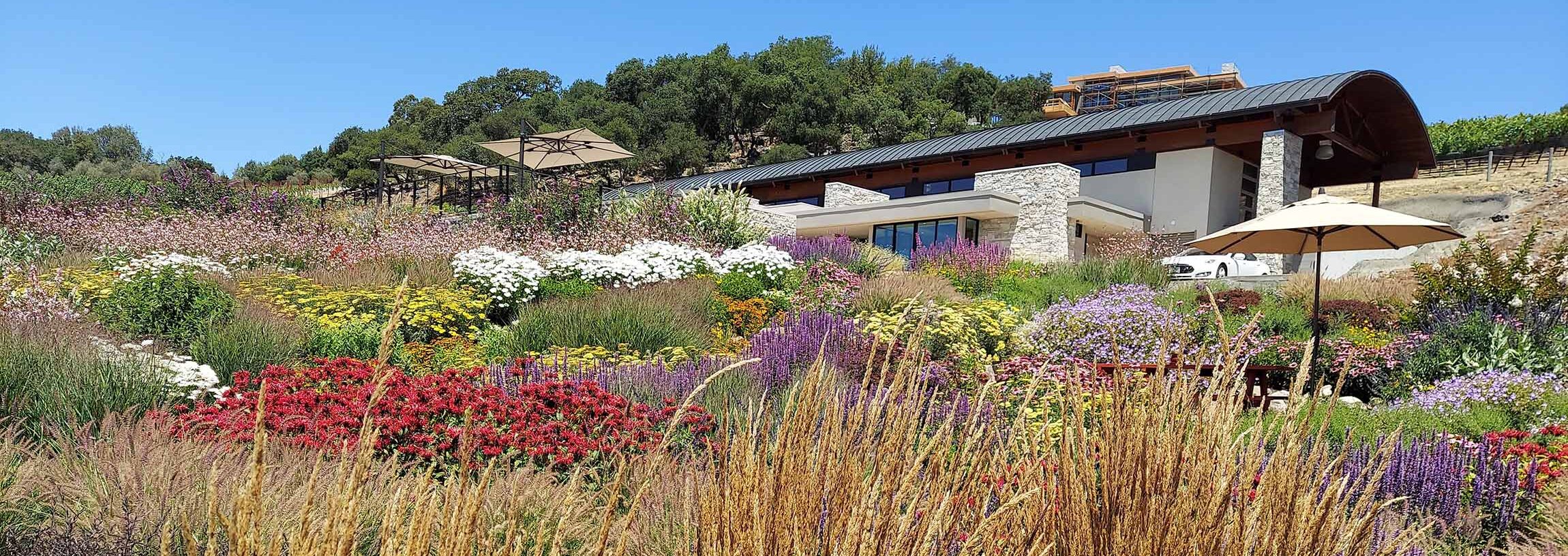
In simple terms, Mediterranean climate planting is about choosing and arranging plants for places with mild, wet winters and hot, dry summers.
That matters because a lot of traditional landscapes are still built around high water expectations. Big lawns. Crowded shrubs. Plants that need constant summer irrigation. And sure, some of that can survive for a while. But survive and thrive are not the same thing.
When a landscape is designed for this climate, you usually get:
- better drought tolerance
- more efficient water use
- stronger plant health
- lower maintenance over time
- more reliable year-round structure and color
It just works better.
And for both residential and commercial properties, that’s the goal. You want something that looks good, feels intentional, and holds up over time.
Native and Adaptive Plants Are Usually the Best Place to Start
This is where a lot of good landscapes either succeed or struggle.
When the plant palette is built around native and adaptive species, everything tends to get easier. These plants are generally better suited to local conditions, and that gives the whole landscape a stronger foundation.
What Native Plants Help With
- supporting local ecology
- handling regional weather patterns
- creating habitat for birds, bees, and butterflies
- reducing the need for excess water and intervention once established
What Adaptive Plants Help With
- longer bloom seasons
- more texture and color variety
- strong performance in Mediterranean-style landscapes
- flexibility in both modern and classic garden designs
A good landscape usually has a thoughtful mix of both.
Pollinator Support Isn’t Just Nice to Have
A lot of people hear “pollinator garden” and picture something messy or overly wild. But that really doesn’t have to be the case.
A pollinator-friendly landscape can be polished, intentional, and high-end. It can also feel way more alive.
There’s something different about a landscape that has movement in it hummingbirds coming through, butterflies working the blooms, bees moving from flower to flower. It feels healthier. More connected. More interesting to actually spend time in.
How to Support Pollinators
- plant a mix of flowering species with staggered bloom times
- use plants in clusters instead of scattering them one by one
- include shrubs and perennials that offer nectar and shelter
- avoid overusing chemicals that disrupt beneficial insect activity
- build in seasonal variety so the landscape offers more than one moment of color
This works just as well for homes as it does for commercial spaces. On a residential property, it adds beauty and a real sensory experience.
Reducing Turf Can Change Everything
If there’s one landscape upgrade that often makes the biggest immediate difference, it’s reducing unnecessary lawn.
Not all turf is bad. There are definitely places where it makes sense. A usable backyard lawn. A small gathering area. A defined open space on a commercial site. Sure.
But a lot of properties have way more grass than they actually need.
You see it all the time:
- narrow side yards nobody uses
- awkward slopes that are hard to mow
- strips of turf along walkways
- decorative lawn areas that eat water but don’t add much value
That kind of turf can be expensive to maintain and surprisingly hard to keep looking good.
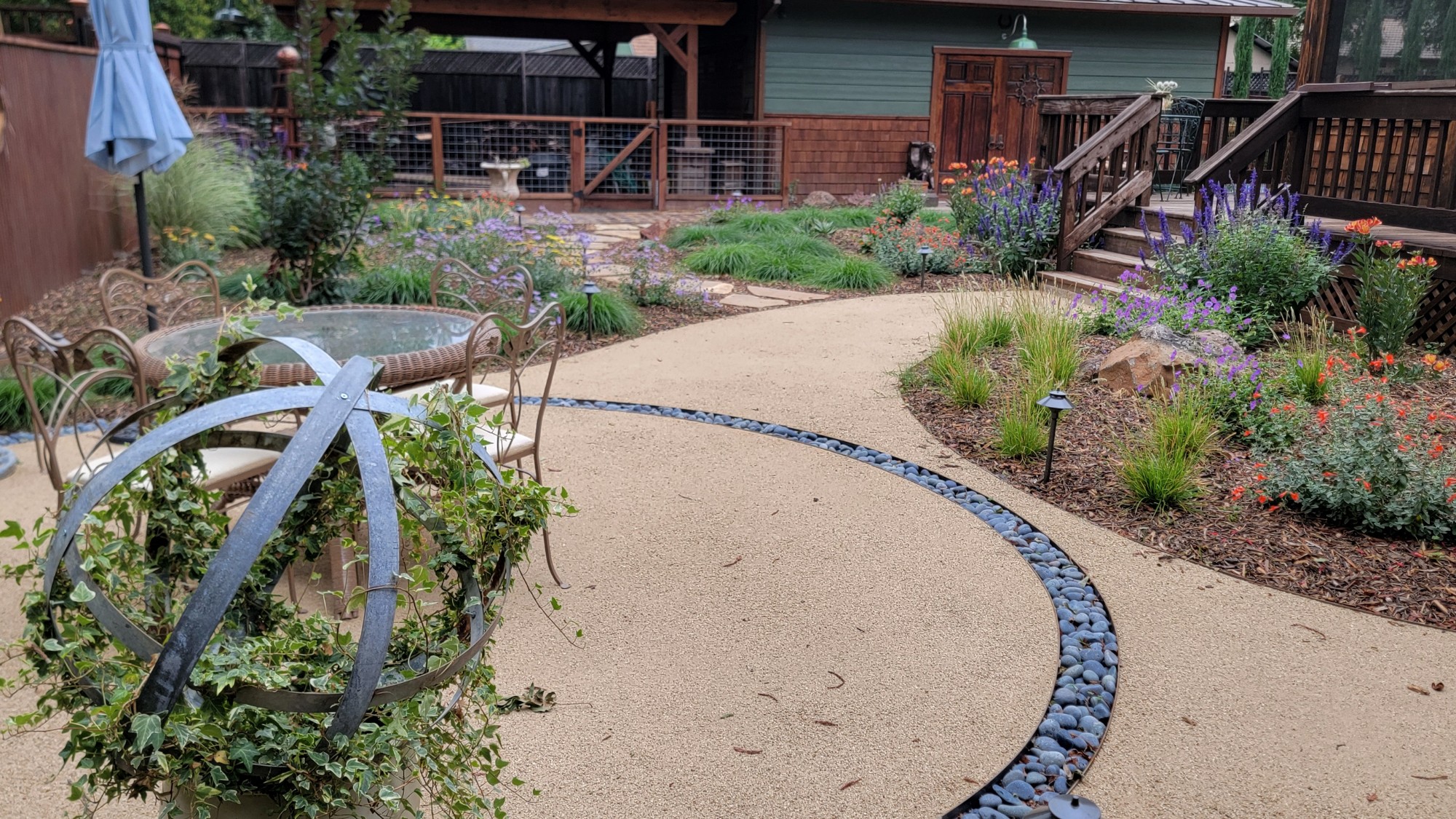
What to Use Instead of Turf
- native and adaptive planting beds
- low-water groundcovers
- mulched shrub zones
- pathways and patios
- outdoor seating areas
- more pollinator-friendly planting
Plant Spacing Matters More Than People Think
This part gets overlooked all the time.
A lot of landscapes are planted too tight because everyone wants that “full” look right away. And yes, right after installation, tightly packed beds can look lush. But fast forward a couple of years and suddenly everything is crowded, overgrown, and competing for space.
That causes problems.
What Happens When Plants are Too Close Together
- poor airflow
- trapped moisture around foliage
- more disease pressure
- awkward growth habits
- constant pruning to control size
- a landscape that feels messy instead of mature
Basically, proper spacing helps the landscape age well.
And that matters whether you’re a homeowner who wants a garden to stay beautiful over time, or a commercial property owner trying to avoid unnecessary plant replacement and maintenance costs.
Better Spacing and Better Irrigation Go Together
Plant health usually isn’t about one issue. It’s often a combination of things.
Overcrowding plus poor irrigation timing. Or the wrong plant in the wrong exposure. Or too much overhead watering in a dense planting bed. All of it adds up.
That’s why good design and good irrigation planning really need to happen together.
What Healthy Systems Include
- plants grouped by similar water needs
- irrigation matched to sun, soil, and exposure
- drip irrigation where it makes sense
- smart weather-based controller adjustments
- fewer situations where foliage stays wet longer than it should
Inspired Landscapes offers irrigation audits, weather-based smart controller systems, ET-based scheduling, system retrofits, and site-specific water management planning all of which support healthier, more efficient landscapes.
What Property Owners Should Focus on First
Thinking about upgrading your Healdsburg landscape? Here’s what to consider first:
- choose plants that fit a Mediterranean climate
- use a smart mix of native and adaptive species
- build in pollinator support
- reduce turf where it isn’t serving a real purpose
- make sure plants are spaced for mature growth and airflow
Those five things alone can completely change how a landscape performs.
Choosing Healdsburg Landscapers Who Think Long-Term
A good landscape is not just about installing plants that look nice for the first season. It’s about creating something that continues to perform visually, functionally, and ecologically year after year.
That takes horticultural knowledge. Water management expertise. Real site analysis. And a design mindset that values both beauty and durability.
For property owners comparing professional landscapers in Healdsburg, that long-term thinking matters. Inspired Landscapes brings together design, installation, maintenance, and irrigation experience, backed by certifications in horticulture, sustainability, and water management, along with deep local experience in Sonoma County landscapes.
FAQ
What is Mediterranean-climate landscaping?
It is a landscaping approach that uses plants and design strategies suited to dry summers and mild, wetter winters.
Why is this style of landscaping a good fit for Healdsburg?
It aligns with local climate conditions, helping landscapes stay healthier while using water more efficiently.
Are native plants always better than adaptive plants?
Not always. A thoughtful mix of native and adaptive plants often gives the best balance of resilience, beauty, and seasonal interest.
How does reducing lawn help a landscape?
Less turf can mean lower water use, reduced maintenance, and more room for functional or pollinator-friendly planting.
Can a pollinator-friendly landscape still look polished?
Yes. With the right design, pollinator-supporting landscapes can feel refined, intentional, and well-suited to high-end properties.
Your Local Landscaping Experts Inspired Landscapes
The best landscapes here don’t fight the climate. They work with it.
If you’re looking for sustainable landscaping that lasts, Inspired Landscapes is here to help you build it.
Reach out today to learn more about our landscaping design, installation and maintenance.
📞 Call: (707) 395-7474

Owner, Inspired Landscapes LLC
Matthew Ripley is the owner of Inspired Landscapes LLC, a Healdsburg based landscape design, installation, maintenance, and irrigation firm serving Sonoma County. His work blends horticultural expertise with sustainable practices, drawing creative influence from Sierra backpacking and Sonoma winery estates to craft gardens that invite wildlife and year round color. Client testimonials highlight his design leadership on residential, estate, and winery properties across the region.