




What Are the Best Alternatives to Traditional Turf?
A big green lawn sounds good on paper.
It looks neat. It feels familiar. And for years, turf was just part of the picture when people imagined a “nice” property.
But there are some big downsides too.
They use a lot of water, need constant upkeep, and often take up space that could be doing something much more useful. That’s true at homes, and it’s just as true at office buildings, wineries, retail spaces, apartment properties, and hospitality settings. If no one is actually using the lawn, it quickly becomes one of the highest-maintenance parts of the landscape for very little payoff.
That’s why more property owners are starting to ask a better question: what should go there instead?
At Inspired Landscapes, we look at turf removal as more than just taking grass out. Let’s walk through some ways landscapers near you in Healdsburg can replace turf with a smarter landscape.
Key Takeaways
- Traditional turf often uses too much water and requires constant upkeep.
- Turf removal can make room for more functional, attractive, and lower-maintenance landscapes.
- Good lawn alternatives depend on sun, soil, drainage, foot traffic, and water goals.
- Popular replacements include no-mow grasses, groundcovers, native planting, meadows, edible gardens, and patios.
- Hybrid landscapes often work best by keeping turf only where it serves a real purpose.
- Irrigation planning is essential to help any new landscape perform efficiently over time.
Why Traditional Turf Isn’t Always Worth It
Turf is not automatically bad. There are times when it still makes sense.
If you have a lawn people actually use for:
- Kids playing
- Pets
- Gatherings
- Recreation
- Open flexible space
then keeping some turf may be perfectly reasonable.
The problem is that a lot of turf has no real purpose.
You see it all the time:
- Thin side-yard strips
- Front lawns no one walks on
- Long edges along driveways
- Commercial greenbelts installed out of habit
- Oversized lawns that are expensive to keep alive
In those situations, turf starts to feel like a resource drain.
The Drawbacks of Traditional Turf
- High water use
- Frequent mowing and edging
- Fertilizer and weed control needs
- Brown patches and repair work
- Ongoing labor costs
- Irrigation issues that never seem to go away
- Very little habitat value
Turf can make a landscape feel flat. It fills space, but it doesn’t always add much character.
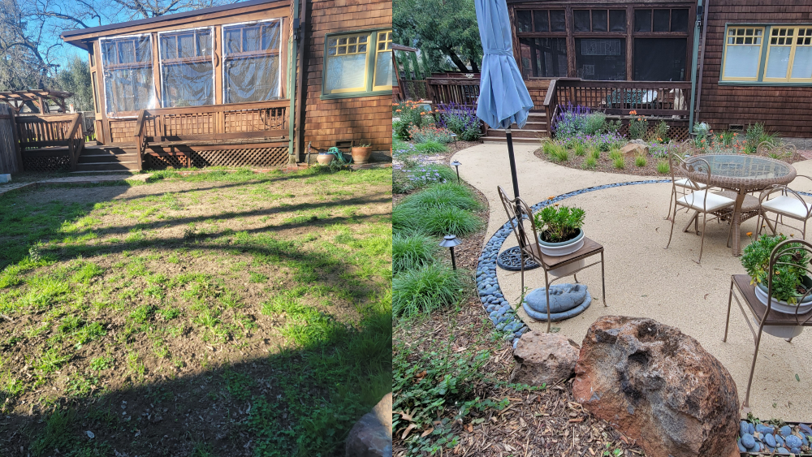
Why Removing Turf Can Be a Great Move
Once that lawn comes out, you can rethink the space completely.
Instead of one big green area that needs constant upkeep, the property can be shaped around how it’s actually used, like with:
- Outdoor seating
- Pollinator-friendly planting
- Better walkways
- Edible gardens
- Shade structures
- Stronger curb appeal
- More efficient irrigation
- Lower-maintenance planting areas
For commercial properties, this can make your site feel more intentional.
For homeowners, it means less time maintaining the yard and more time enjoying your outdoor space.
That’s the shift that matters most. You stop maintaining a lawn just because it’s there, and start creating a landscape with purpose.
What Makes a Good Lawn Alternative?
Not every replacement is a good one.
That’s where a lot of people get tripped up. They decide they’re done with lawn, then replace it with something trendy that doesn’t actually fit the site.
A good turf alternative should match the way the property works.
What to Consider
- How much sun the area gets
- Shade patterns through the day
- Soil and drainage
- Foot traffic
- Maintenance expectations
- Water use goals
- Style of the home or commercial property
That’s why the best lawn replacement projects are usually planned carefully. The goal is not just to remove turf. The goal is to put something better in its place.
1. Low-Water or No-Mow Grass Blends
This is a great option for people who still want the look of a lawn, just without all the baggage.
Low-water or no-mow grass blends can give you that soft green effect while cutting back on mowing and irrigation compared to traditional turf.
Best for:
- Front yards
- Larger residential properties
- Light-use commercial areas
- Spaces where a lawn-like look still feels right
Why people like them:
- Familiar appearance
- Softer visual feel
- More relaxed and natural look
- Less maintenance than standard sod
This option is especially good when you want some green space but don’t need a perfectly manicured lawn.
2. Walkable Groundcovers
Groundcovers are one of the best alternatives to traditional turf, especially in areas that don’t get heavy use.
They don’t try to be lawn. That’s part of the appeal.
Instead, they bring texture, flowers, fragrance, and more personality to the landscape.
Great places for groundcovers:
- Side yards
- Courtyards
- Small front yards
- Path edges
- Patio transitions
- Low-traffic commercial areas
Benefits:
- Little to no mowing
- Lower water use
- More visual interest
- Softer connection between hardscape and planting
Some groundcovers can handle light foot traffic, while others are more decorative. The important part is choosing the right one for the space.
3. Native and Pollinator-Friendly Planting
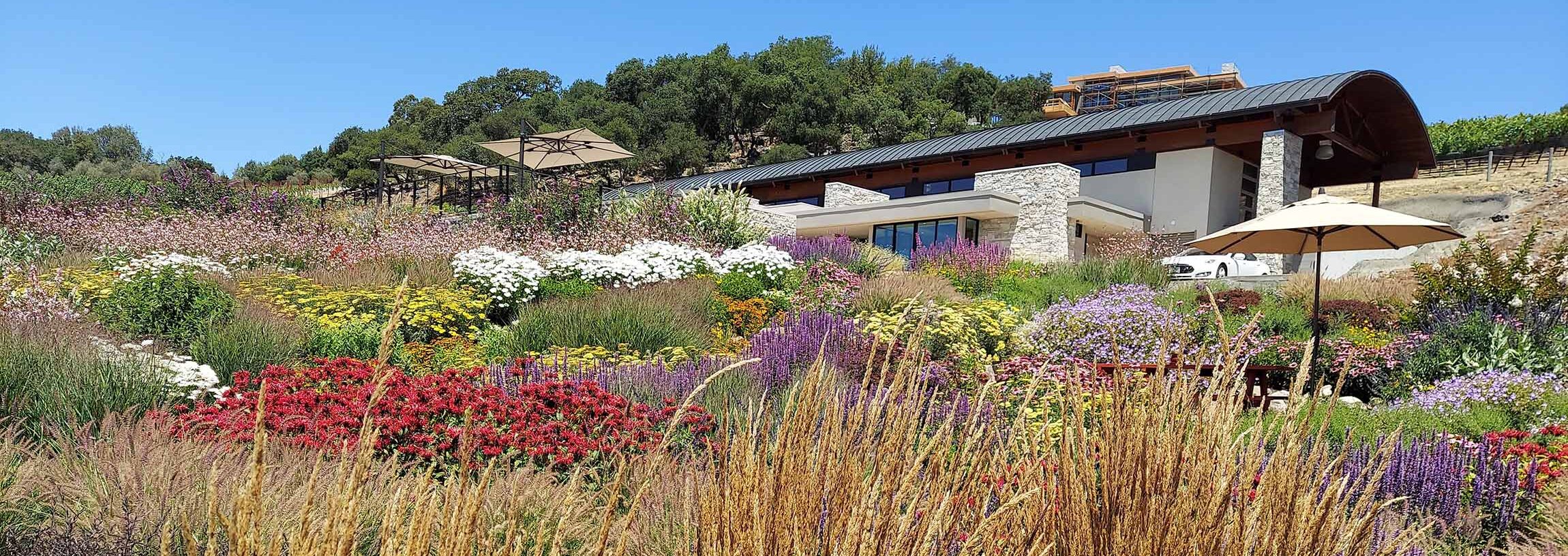
If the lawn is mostly there to “look nice,” native and pollinator-friendly planting is often a much better answer.
Instead of using turf as empty filler, this approach creates a layered landscape with color, movement, and habitat value.
This kind of planting may include:
- Native shrubs
- Flowering perennials
- Ornamental grasses
- Mulched beds
- Seasonal blooms
- Pollinator-supportive species
Best for:
- Residential front yards
- Commercial entries
- HOAs
- Hospitality spaces
- Winery and estate landscapes
Why it works:
- Feels more alive
- Supports bees, butterflies, and birds
- Brings stronger seasonal interest
- Can be much more water-wise when designed properly
This kind of landscape usually feels richer and more connected to place than a standard lawn.
4. Meadow-Style Planting
For larger open areas, meadow-style planting can be a beautiful alternative.
It’s a strong fit for places where a wide, flat lawn doesn’t really need to exist.
Good uses for meadow planting:
- Large residential properties
- Estate gardens
- Winery settings
- Commercial setbacks
- Open or sloped areas
Why people love it:
- Natural movement
- Softer, more relaxed character
- Better habitat value
- Less mowing than turf
- Strong regional feel
A meadow is not just “letting things grow wild.” It still takes planning and maintenance. But it offers a lot more beauty and personality than a big unused lawn.
5. Edible Gardens and Productive Spaces
This is one of the most satisfying turf alternatives because it turns passive space into something useful.
If part of the lawn is just sitting there doing nothing, it may be better used as a productive garden.
This can include:
- Raised vegetable beds
- Herb gardens
- Espalier fruit trees
- Berry patches
- Citrus
- Kitchen garden spaces
Great for:
- Homes
- Restaurants
- Wineries
- Hospitality properties
- Community-oriented sites
Why it works:
- Adds everyday value
- Makes the space more personal
- Creates beauty and function at the same time
- Gives the landscape a stronger connection to daily life
Not every property needs an edible garden, but for the right owner, it can be a much better use of former lawn space.
6. Patios, Paths, and Outdoor Living Areas
Sometimes the best turf alternative is not another plant. It’s a better use of the square footage.
A lawn nobody uses can often become a patio, courtyard, or gathering area that people actually enjoy.
Common replacements include:
- Patios
- Decomposed granite seating areas
- Pathways
- Outdoor dining spaces
- Pergolas
- Shade structures
- Raised planters
- Courtyards
This is especially useful for commercial properties where guest experience matters, and for homeowners who want to spend time outside without managing a lawn.
Inspired Landscapes regularly builds these types of features as part of larger landscape transformations, combining hardscape, planting, lighting, and irrigation into a more functional overall plan.
7. Hybrid Landscapes
For a lot of properties, this is the smartest answer.
You do not have to choose between keeping all the lawn and removing all of it.
A hybrid landscape keeps turf where it actually serves a purpose and replaces the rest with better-performing elements.
A hybrid layout might include:
- A smaller play lawn
- Groundcovers around paths
- Pollinator beds
- Shrub planting
- Meadow zones
- Seating areas
- Edible gardens
- Water-wise irrigation
This approach works well because it’s practical. It keeps what’s useful and upgrades what isn’t.
Don’t Overlook the Irrigation
This part matters more than most people realize.
Even a beautiful low-water landscape can underperform if the irrigation is still set up like an old lawn system.
That’s why turf replacement should always include a serious look at irrigation.
A good irrigation plan should consider:
- Plant type
- Hydrozones
- Soil conditions
- Sun and shade
- Seasonal needs
- Water efficiency goals
Inspired Landscapes puts a lot of focus on this side of the work, with services that include irrigation audits, repairs, retrofits, smart controllers, and customized scheduling. That kind of technical planning is what helps a new landscape stay healthy and efficient over time.
The Best Landscapers: What People Are Really Searching For
When someone types landscapers near me in Healdsburg into a search bar, they’re usually not just looking for someone to tear out grass.
They’re looking for guidance.
They want help understanding:
- What should stay
- What should go
- What will actually look good
- What will save water
- What will hold up over time
- What will make the property more functional and valuable
That’s why it helps to work with a team that understands design, horticulture, irrigation, installation, and maintenance together. Turf removal is not just a demolition project. It’s a redesign opportunity.
FAQ
What is the best alternative to traditional turf?
The best alternative depends on how the space is used. Popular options include groundcovers, native planting, meadow-style landscapes, no-mow grass blends, and outdoor living areas.
Should all turf be removed?
Not always. Turf can still make sense in areas used for play, pets, gatherings, or recreation.
Which lawn alternatives use less water?
Native planting, pollinator-friendly beds, meadow-style landscapes, and many groundcovers can use less water than traditional turf when designed well.
Are lawn alternatives lower maintenance?
Many are. Replacing unused turf can reduce mowing, edging, fertilizer needs, and irrigation demands.
Why does irrigation matter after turf removal?
Even low-water landscapes need the right irrigation setup. A properly planned system helps plants stay healthy while avoiding wasted water.
Trade in the High-Maintenance Turf for a Smarter Landscape
You don’t have to keep pouring water and maintenance into turf that isn’t serving your property. With the right plan, that space can become more beautiful, more functional, and easier to manage.
If you’ve been searching for landscapers near me in Healdsburg, Inspired Landscapes can help you turn outdated lawn into a landscape with lasting value.
📞 Call: (707) 395-7474

Owner, Inspired Landscapes LLC
Matthew Ripley is the owner of Inspired Landscapes LLC, a Healdsburg based landscape design, installation, maintenance, and irrigation firm serving Sonoma County. His work blends horticultural expertise with sustainable practices, drawing creative influence from Sierra backpacking and Sonoma winery estates to craft gardens that invite wildlife and year round color. Client testimonials highlight his design leadership on residential, estate, and winery properties across the region.