




Create a Sustainable, Water-Wise, and Fire-Resilient Outdoor Space
In Sonoma County, a landscape has to do more than look beautiful for one season. It needs to stay healthy through long dry summers, use water responsibly, manage winter runoff, and remain easier to maintain during fire season. The strongest outdoor spaces are not built around just one of those priorities. They are designed to support all of them at once.
A sustainable, water-wise, and fire-resilient landscape is not about stripping a property down or sacrificing beauty. It is about making better decisions from the start. Healthy soil supports stronger plants. Smart irrigation reduces waste. Climate-appropriate plant choices lower maintenance demands. Thoughtful spacing improves plant health while reducing dense fuel buildup. Practical hardscape helps organize circulation, support drainage, and create cleaner transitions near structures.
That integrated approach is often what separates a landscape that looks finished on installation day from one that actually performs year after year. For homeowners and property managers looking for a local landscape company, long-term performance matters just as much as first impressions.
Key Takeaways
- Start with the site itself, not just the plant palette.
- Improve soil health first so plants use water more efficiently.
- Use hydrozoning and smart irrigation to apply the right water in the right places.
- Choose native and climate-adapted plants that are suited to Sonoma County conditions.
- Remove turf where it adds little function and replace it with more purposeful landscape use.
- Use hardscape strategically to improve access, drainage, and fire-conscious transitions.
- Treat fire resilience as an ongoing maintenance strategy, not a one-time installation choice.
- Think of the landscape as a system where soil, irrigation, planting, hardscape, and maintenance all work together.
Start with the Site, Not the Plant List
Many landscape problems begin when design starts with appearance alone. It is easy to focus on a favorite style, plant palette, or trend before understanding how the land actually behaves. But the site usually tells you what will succeed if you take the time to read it.
Planning Your Landscape
A strong landscape plan should begin with careful observation of:
- Sun and shade patterns
- Wind exposure
- Slope and grade changes
- Soil type and compaction
- Drainage and runoff patterns
- Privacy needs
- Access and circulation
- How people actually use the property
Consider Location and Sloping
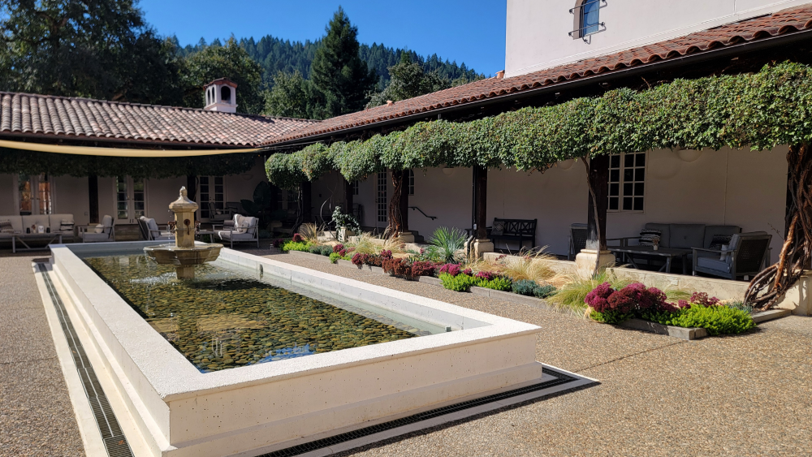
A west-facing planting bed that bakes in afternoon sun should not be treated the same way as a protected courtyard. A sloped side yard with runoff issues needs a different strategy than a flat entry garden. Once those conditions are understood, every decision that follows becomes more precise.
Soil Testing
Soil testing also belongs in this early phase. What happens below grade affects nearly everything above it. Compacted soil can limit root growth. Clay-heavy soil may stay wet too long. Sandy soil may dry too quickly. Those conditions shape irrigation performance, drainage planning, plant health, and maintenance demands.
If You Ignore Site Conditions
When site analysis is skipped, property owners often end up solving the same problems repeatedly. Plants struggle. Irrigation schedules get adjusted again and again. Drainage issues show up in winter. Maintenance becomes more expensive than expected. Starting with the site reduces that guesswork and creates a more resilient landscape from the beginning.
Build Living Soil for Long-Term Resilience
A high-performing landscape is built from the ground up. Soil is not just something plants sit in. It is a living system that affects water retention, nutrient access, root development, and overall plant health.
That is why sustainable landscapes benefit from soil preparation and compost integration before planting begins. Better soil structure helps water move more effectively, supports microbial life, and improves root establishment. In a region with long dry periods, strong soil biology can make a meaningful difference in how efficiently a landscape uses water.
Why Use Mulch?
Mulch is another foundational tool. When applied correctly, it helps:
- Moderate soil temperature
- Slow evaporation
- Reduce weed pressure
- Protect roots from summer heat
- Limit erosion during rain
But mulch only works when it is managed properly. Too little has limited effect. Too much can trap moisture where it should not and create problems near trunks and stems. In a well-maintained landscape, mulch is monitored and adjusted over time rather than ignored after installation.
If the goal is a sustainable outdoor space that actually lasts, soil health cannot be treated as an afterthought.
Design for Water Efficiency with Smarter Irrigation
A water-wise landscape is not created by simply watering less. It is created by applying water more intelligently.
One of the most important principles is hydrozoning, or grouping plants with similar water needs together. Low-water shrubs should not share the same schedule as thirsty annual color. Trees should not be irrigated like shallow-rooted turf. Sunny exposures, shady beds, slopes, planters, and lawn areas all behave differently.
When those differences are respected, irrigation becomes easier to manage and far more efficient.
Key Water-Wise Irrigation Strategies
- Group plants by water need
- Match irrigation type to the planting area
- Use pressure-regulated equipment
- Upgrade to smart, weather-based controllers
- Inspect the system regularly for leaks, clogs, and misaligned heads
Does your irrigation system need a tune up? Check out our blog on the most common irrigation maintenance FAQs.
Drip Irrigation
Drip Irrigation brings water closer to the root zone of your plants. This helps reduce water waste from overspray, runoff, and evaporation.
Works best for:
- Shrub beds
- Perennial borders
- Raised planters
- Irregular planting areas
Spray Systems
While efficient overall, spray systems can still be appropriate in certain circumstances, but they need to be matched carefully to the site.
Works best for:
- lawn or broad-coverage areas
Smart Controllers
Smart controllers add another layer of efficiency. Weather-based systems can respond to changing conditions instead of following an outdated static schedule. That helps reduce overwatering during cooler periods and improves responsiveness during heat spikes.
Irrigation Audits
Routine irrigation audits matter too. A landscape can only be called water-wise if the irrigation system is still functioning the way it was intended.
For more practical guidance on adjusting schedules, improving efficiency, and reducing plant stress during dry conditions, explore our guide on how to protect your landscaping during a drought.
Choose Plants That Fit the Climate
One of the most practical rules in sustainable landscaping is still one of the simplest: right plant, right place.
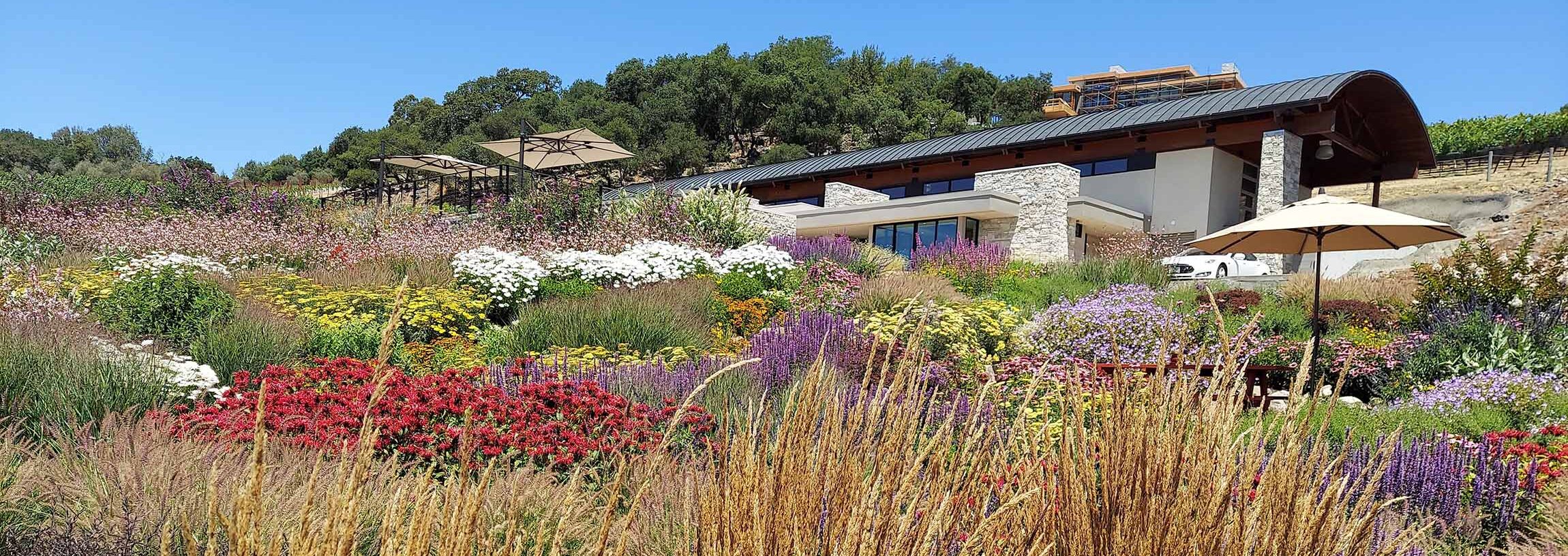
In Sonoma County, landscapes usually perform best when the plant palette reflects the reality of a Mediterranean climate. That often means relying more heavily on native and adaptive plants that can handle hot, dry summers and mild, wetter winters with less stress. These plants generally require less supplemental water once established and tend to be better suited to local conditions over time.
That does not mean sacrificing beauty. In many cases, it improves it.
Climate-appropriate planting can still deliver:
- Layered texture
- Seasonal color
- Evergreen structure
- Fragrance
- Pollinator activity
- A stronger sense of place
When plants are truly suited to the site, they mature more gracefully and require less correction later. The landscape feels grounded rather than forced.
Supporting Local Pollinators
Pollinator support belongs in this conversation as well. A landscape that welcomes hummingbirds, butterflies, and beneficial insects often feels more alive and connected to its environment. That can be achieved without losing refinement. Careful plant grouping, staggered bloom times, and reduced chemical dependency can create a polished landscape that is also ecologically responsive.
Balancing Your Landscape
Spacing matters just as much as plant choice. Overplanted beds may look lush at first, but they often become crowded, disease-prone, difficult to irrigate, and harder to manage safely. Better spacing improves airflow, reveals plant form, reduces maintenance pressure, and supports fire resilience by limiting continuous dense growth.
Reduce Turf Where It Is Not Earning Its Keep
One of the fastest ways to make a landscape more water-wise is to question how much lawn the property truly needs.
Turf still has value in some spaces. A play area, a gathering lawn, or a flexible open-use zone may absolutely justify the water and maintenance it requires. But many landscapes include lawn simply because it has always been there, not because it serves a useful purpose.
Where Turf Loses Value
Common underperforming lawn areas include:
- Narrow side-yard strips
- Awkward slopes
- Decorative front patches no one uses
- Low-value commercial greenbelts
- Difficult corners that are hard to irrigate evenly
What to Replace Turf With
These areas are often strong candidates for improvement. Replacing unnecessary turf with more intentional landscape uses can reduce water demand and create a more purposeful design. Good alternatives include:
- Native and adaptive planting
- Low-water groundcovers
- Mulched shrub zones
- Gravel gardens
- Seating areas
- Paths and circulation zones
- Raised planters or edible gardens
When turf is removed thoughtfully, the result often improves both performance and curb appeal.
Use Hardscape Strategically
Hardscape should not be treated as separate from sustainability. Paths, patios, gravel areas, retaining features, and clean transitions can do a tremendous amount of functional work in a resilient landscape.
They can help:
- Organize circulation
- Improve maintenance access
- Break up dense planting masses
- Support drainage
- Reduce erosion
- Create cleaner transitions near buildings
- Interrupt fuel continuity in fire-conscious design
This doesn’t mean paving everythingbut using hardscape where it solves real problems.
Stormwater and Runoff
A water-wise landscape is not only about how irrigation water is applied. It is also about how stormwater moves through the property and whether the site is designed to slow, absorb, direct, or shed that water responsibly. The best landscapes manage water in both drought and storm.
Fire Resilience Depends on Maintenance, Not Just Installation
Fire resilience is not created by one cleanup or one design decision. It is the result of thoughtful planning followed by ongoing care.
Creating a fire-conscious landscape often includes climate-appropriate plant selection, better spacing, reduced fuel loads near structures, strategic irrigation, and noncombustible breaks where they make sense. But even a well-designed property can become more vulnerable over time if maintenance is inconsistent.
What to Do Before Fire Season
Seasonal priorities often include:
- Removing dead material from shrubs and perennials
- Clearing leaf litter and debris
- Thinning overgrown understory
- Monitoring irrigation so plants are not pushed into stress
- Maintaining cleaner transitions around structures
- Pruning for airflow and visibility
- Reducing dense, connected plant mass where appropriate
One of the most helpful mindset shifts is understanding that defensible space and beauty can coexist. A well-edited landscape should not look barren. It should look clear, intentional, and be easier to manage. That balance matters in Sonoma County, where dry-season conditions make long-term maintenance just as important as initial design.
Think in Systems, Not Isolated Features
The strongest outdoor spaces are not assembled feature by feature in isolation. They are planned as living systems.
How Each Piece Links Together
Soil health affects irrigation efficiency. Plant choice affects maintenance demand. Spacing influences airflow and fire resilience. Hardscape shapes circulation and drainage. Seasonal care protects everything that has been installed.
That is why long-term thinking matters so much when evaluating local landscaping companies. The right partner should be able to connect design, installation, irrigation, and maintenance into one clear strategy rather than treating them as unrelated services.
How Successful Landscapes Work
A truly successful Sonoma County landscape does not fight the climate. It works with it. It uses water more intelligently. It supports pollinators and people. It protects the value of the property while remaining beautiful, functional, and easier to manage over time.
That is the real goal: not a landscape that merely survives, but one that thrives with purpose.
FAQs
What makes a landscape both water-wise and fire-resilient?
It combines climate-appropriate plant choices, better spacing, efficient irrigation, healthy soil, reduced unnecessary turf, and ongoing maintenance that prevents excessive fuel buildup near structures.
Should all lawn be removed?
No. Lawn can still make sense in high-use areas. The better question is whether each lawn area serves a real function. If it does not, that space may be better used for low-water planting, seating, or circulation.
How often should fire-focused maintenance happen?
It should be treated as an ongoing seasonal process, not a one-time cleanup. Conditions shift throughout the dry season, so pruning, debris removal, irrigation checks, and touch-up work often need regular attention.
Can a sustainable landscape still feel high-end?
Absolutely. Some of the most refined landscapes are the ones built with ecological intelligence. Thoughtful hardscape, layered planting, seasonal color, fragrance, and pollinator activity can all be part of a polished design.
What should I ask when comparing local Sonoma County landscaping companies?
Ask how they approach site analysis, irrigation planning, drainage, plant selection for local conditions, soil preparation, and long-term maintenance. A company that can explain how those systems work together is usually thinking beyond surface appearance.
Build Sustainable Beauty in Your Space – Inspired Landscapes
If you are looking for a local landscape company that understand how to balance sustainability, water efficiency, and long-term performance, Inspired Landscapes brings together horticultural expertise, water-management knowledge, and site-responsive design to create outdoor spaces that are beautiful and functional.
Inspired Landscapes is an award-winning, Sonoma County-based landscaping company with expertise across design, installation, irrigation, and maintenance. Our background and experience are supported by certifications in water management, sustainability, and horticulture.
Together, let’s transform your property with water-wise, sustainable design that looks beautiful and is built to last!
📞 Call: (707) 395-7474

Owner, Inspired Landscapes LLC
Matthew Ripley is the owner of Inspired Landscapes LLC, a Healdsburg based landscape design, installation, maintenance, and irrigation firm serving Sonoma County. His work blends horticultural expertise with sustainable practices, drawing creative influence from Sierra backpacking and Sonoma winery estates to craft gardens that invite wildlife and year round color. Client testimonials highlight his design leadership on residential, estate, and winery properties across the region.