



How to Build a More Sustainable Landscape? 5 Installation Practices
Sustainable installation is the foundation for outdoor spaces that are beautiful, resilient, and appropriate for surviving and thriving in Sonoma County’s climate.
When planning a sustainable backyard renovation in Sonoma County, the most important decisions often happen below the surface and behind the scenes. Understanding soil conditions, drainage, irrigation zoning, and plant placement will shape how well a landscape performs in the long run.
So, how can you build a sustainable landscape that accounts for water use, plant health, maintenance needs, and long-term value?
In this blog we’ll dive into five essential sustainable installation practices so you and your landscaper can create the perfect sustainable landscape installation!
Key Takeaways
- Healthy soil testing helps prevent costly plant and drainage issues.
- Compost integration improves soil structure, root health, and resilience.
- Drainage planning protects plants, hardscapes, and surrounding structures.
- Hydrozoning groups plants by water needs for better irrigation efficiency.
- Right plant, right place supports long-term beauty with less waste and maintenance.
- Sustainable landscapes perform best when soil, water, drainage, and plant choices work together
-
Soil Testing: Start with the Ground Beneath You
Healthy landscapes can only start with healthy soil. Soil testing gives a clear understanding of what is happening below grade before installation starts.
A soil test can reveal:
- Soil texture and composition
- pH balance
- Organic matter levels
- Nutrient availability
- Drainage behavior
- Compaction issues
Your soil will influence nearly every part of landscape performance. Roots need oxygen, water, and room to grow. If the soil is compacted or poorly draining, plants can struggle even when they receive proper irrigation.
For example:
- Clay-heavy soils may hold too much water and need careful drainage planning
- Sandy soils may drain too quickly and need support with moisture retention
- Compacted soils may require cultivation and amendment before planting
At Inspired Landscapes we emphasize site analysis, including soil conditions, as part of creating customized landscapes and irrigation programs.
Why it matters
- Prevents plant failure caused by hidden soil problems
- Guides better amendment choices
- Supports more accurate irrigation planning
- Protects the client’s investment from avoidable issues later
-
Compost Integration: Build Living Soil
Once soil conditions are understood, compost integration can help dramatically improve your site’s performance. Compost is one of the most effective tools for this because it helps create living soil.
When used properly, compost can help:
- Improve soil structure
- Increase microbial activity
- Enhance nutrient cycling
- Improve moisture retention in some soils
- Support aeration and root growth
In Sonoma County, where long dry periods are common, soil health directly affects how efficiently a landscape uses water. Better soil supports stronger root systems, and stronger root systems typically create healthier, more drought-resilient plants.
Compost should always be used strategically. A sustainable contractor does not apply the same amendment everywhere without considering:
- Existing soil composition
- Planting type
- Irrigation method
- Drainage patterns
- Long-term maintenance needs
We love compost for organically based fertilization and sustainable horticultural care.
Why it matters
- Reduces stress on newly installed plants
- Improves the soil’s ability to support long-term growth
- Helps lower dependence on excessive fertilizer inputs
- Creates a healthier and more resilient planting environment
-
Drainage Planning: Water Must Be Managed Both Ways
Most people focus on water use when considering how to make their landscape more sustainable, and that is essential, but drainage is just as important! Your landscape needs a plan for managing rainfall and runoff.
Poor drainage can lead to:
- Standing water
- Erosion
- Root rot
- Soil loss
- Hardscape movement
- Damage to structures or foundations
Good drainage planning considers how water moves across your site and where it should go. Depending on the property, that may include:
- Grading adjustments
- Swales
- Dry creek beds
- Catch basins
- Permeable surfaces
- Subsurface drainage systems
- Retaining walls and contour management
Looking for drainage help? At Inspired Landscapes, our installation services include site clearing, grading, hardscape construction, retaining walls, fountains, and creek beds, all of which can play an important role in drainage performance.
Why it matters
- Protects plants from oversaturation
- Reduces repair costs over time
- Helps preserve soil and hardscape integrity
- Supports better overall site function during winter storms
-
Hydrozoning: Irrigate by Plant Need, Not Convenience
Speaking of water, hydrozoning is one of the smartest ways to improve water efficiency in a new landscape. The concept is straightforward: plants with similar water needs should be grouped together in the same irrigation zone.
Without hydrozoning, landscapes waste water and create issues:
- Low-water plants get overwatered
- Higher-water plants do not get enough moisture
A properly hydrozoned landscape in Sonoma County takes into account:
- Plant water needs
- Sun and shade exposure
- Soil conditions
- Slope
- Irrigation device type
- Seasonal adjustments
At Inspired Landscapes we bring strong water-management credentials to this part of the process, including CLCA Water Manager expertise, QWEL certification, hydrozone maps, water use calculations, smart Wi-Fi-enabled controllers, and ET-based irrigation programming.
Why it matters
- Improves water efficiency
- Supports healthier plants
- Reduces waste and runoff
- Makes irrigation management more precise and practical
-
Right Plant, Right Place: The Core of Sustainable Design
One of the most important principles in sustainable landscaping is choosing the right plant for the right location. A plant may be beautiful, but if it is poorly matched to the site, it will likely require more water, more maintenance, and more replacement over time.
Right-plant/right-place decisions should consider:
- Sun exposure
- Shade patterns
- Soil type
- Drainage conditions
- Mature plant size
- Air circulation
- Water availability
- Maintenance expectations
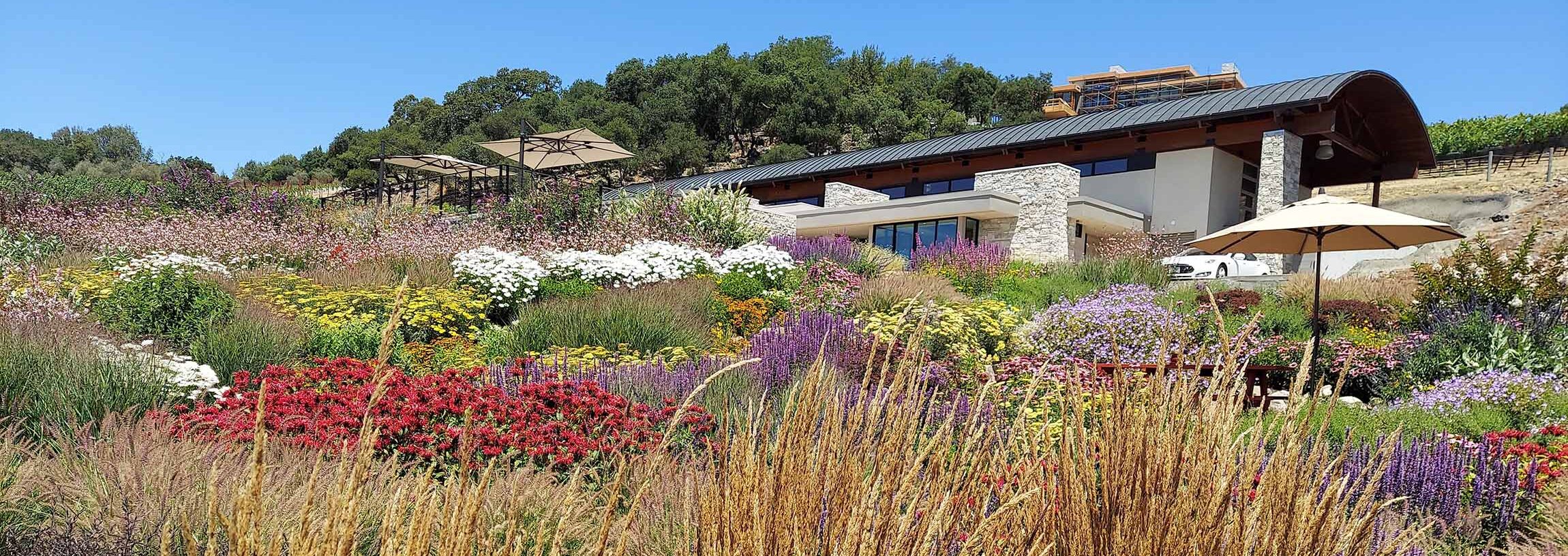
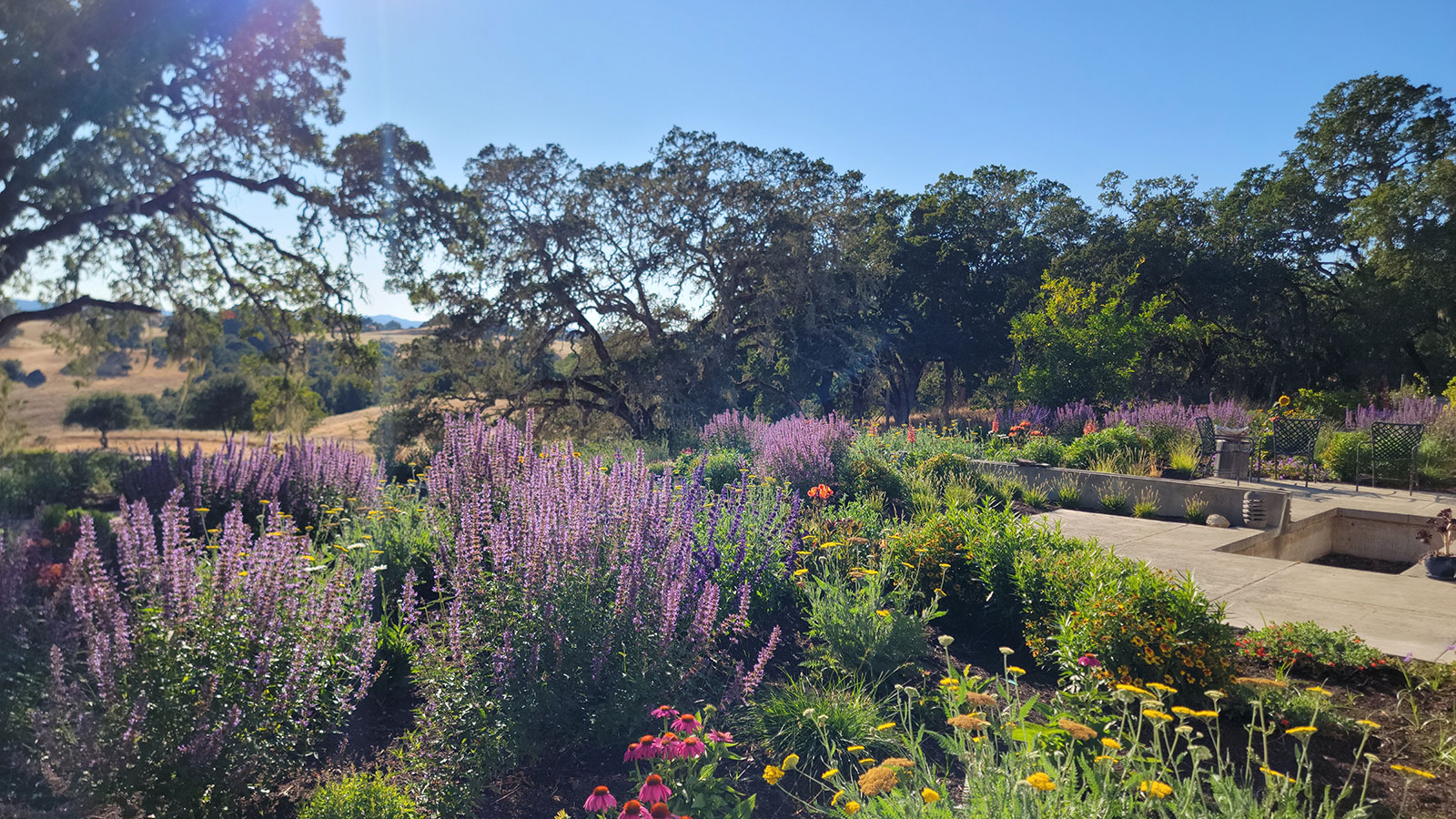
This principle is what turns a short-term installation into a long-term success. It also supports the kind of layered, sensory-rich landscapes Inspired Landscapes is known for, including dynamic seasonal color, fragrant plant selections, and support for hummingbirds, butterflies, and local pollinators.
Why it matters
- Reduces plant stress and failure
- Supports long-term visual appeal
- Lowers maintenance demands
- Helps create landscapes that are both beautiful and ecologically appropriate
How These Practices Work Together
The best sustainable landscapes are systems, not collections of unrelated features. Each installation decision supports the next:
- Soil testing informs amendment strategy
- Compost improves planting conditions
- Drainage planning protects roots and hardscapes
- Hydrozoning improves irrigation efficiency
- Right-plant/right-place decisions support long-term success
FAQ
Why is soil testing important before landscape installation?
Soil testing helps identify texture, drainage, compaction, pH, and nutrient levels so the landscape can be built on a stronger foundation.
How does compost improve a sustainable landscape?
Compost supports healthier soil by improving structure, microbial activity, moisture balance, and root development.
Why does drainage matter in sustainable landscaping?
Good drainage helps prevent standing water, erosion, root rot, and damage to hardscapes or nearby structures.
What is hydrozoning?
Hydrozoning is the practice of grouping plants with similar water needs into the same irrigation zone to reduce waste and improve plant health.
What does “right plant, right place” mean?
It means selecting plants based on site conditions like sun, shade, soil, drainage, and maintenance needs so they can thrive long term.
How do these practices support sustainability?
Together, they improve water efficiency, reduce avoidable plant loss, support healthier growth, and create landscapes that are more resilient over time.
Sustainable Landscaping Done Right – Inspired Landscapes
At Inspired Landscapes, we believe sustainability and beauty belong together. A well-installed landscape should not only look exceptional on day one, but continue to function, mature, and enrich the property over time. That is the true value of thoughtful, site-responsive backyard renovation.
Reach out today and start planning your sustainable landscape!
📞 Call: (707) 395-7474

Owner, Inspired Landscapes LLC
Matthew Ripley is the owner of Inspired Landscapes LLC, a Healdsburg based landscape design, installation, maintenance, and irrigation firm serving Sonoma County. His work blends horticultural expertise with sustainable practices, drawing creative influence from Sierra backpacking and Sonoma winery estates to craft gardens that invite wildlife and year round color. Client testimonials highlight his design leadership on residential, estate, and winery properties across the region.