



California Native Plant Design: Your Questions Answered
If you’re picturing a yard that’s beautiful, water-wise, and doesn’t demand a weekend of upkeep every month, native plants are probably on your radar. Before committing, most homeowners want the same handful of questions answered first:
Will it look overgrown?
Will it really save water?
Will it invite critters you don’t want?
Below, we’ve gathered the questions we hear most often about native plant landscape design in Sonoma County, from water use to maintenance to what the process actually looks like. Whether you’re brand new to native landscaping or just want to fact-check what you’ve read online, you’ll find straight, practical answers here.
Key Takeaways
- Native plants aren’t the same as “drought-tolerant” plants, native plants are specifically adapted to our local soil, rainfall, and seasons.
- Established native plantings typically need far less water than a lawn, though not zero water.
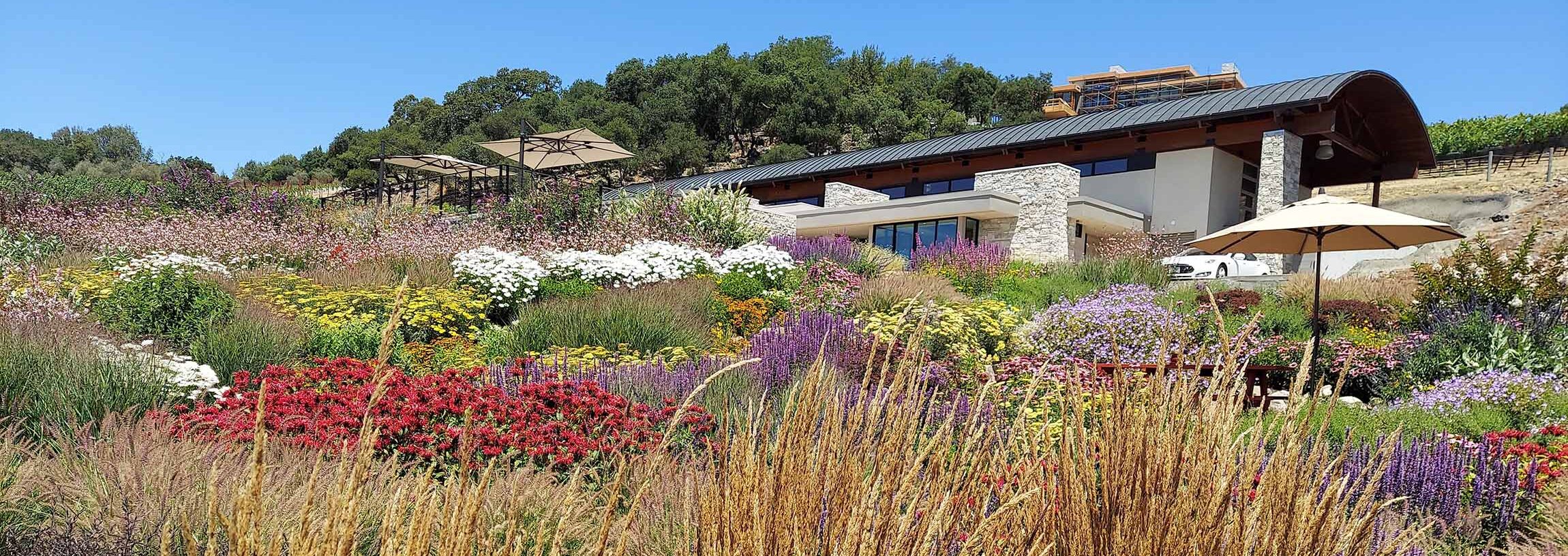
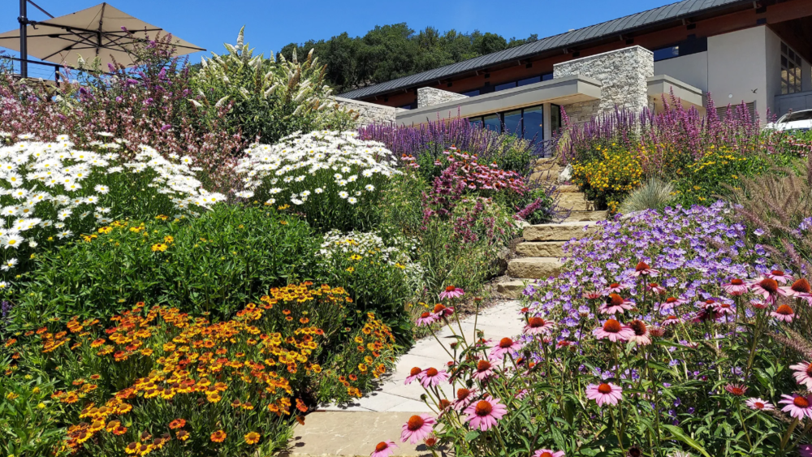
- A native landscape can look intentional and polished, the “wild” look comes down to design choices, not the plants themselves.
- Native plants generally support pollinators, not pests, and don’t inherently attract more snakes.
- A site-specific design and irrigation plan matters more than the plant list alone, especially in fire-prone areas.
Native Plants 101: Understanding the Basics
What actually makes a plant “native” to Sonoma County?
A native plant is one that evolved in this region over thousands of years, without human introduction. In Sonoma County, coast live oak, manzanita, and western redbud are all considered native. Because these plants developed alongside our local soil, rainfall patterns, and dry summers, they’re naturally suited to our conditions rather than needing to be coaxed into surviving them.
This is different from ornamental or imported plants, which often need extra water, fertilizer, or soil amendments to thrive here long-term. Natives, by contrast, are already working with our climate instead of against it.
How are native plants different from “drought-tolerant” plants?
Quick Answer: “Drought-tolerant” is a broad category; “native” is a specific subset of it. Not every drought-tolerant plant is native, and that distinction matters more than people expect.
- Drought-tolerant plants can come from dry climates anywhere — Mediterranean herbs, South African succulents, Australian shrubs.
- Native plants are drought-tolerant and originally from this region.
- Because natives evolved alongside local pollinators, birds, and soil organisms, they typically support the local ecosystem in ways imported drought-tolerant plants don’t.
Will my yard look “wild” or unkempt with native plants?
Quick Answer: Not if it’s designed intentionally. A native landscape can look just as polished as a traditional one. The “wild” look comes from design choices, not the plants themselves.
Structure is what separates a tidy native garden from an overgrown one: defined pathways, clean hardscape edges, and plantings grouped with intention rather than scattered at random. That’s why we always start with a site walk and a full planting plan, rather than simply swapping in native species one-for-one.
Water Use, Cost & Sustainability
Do native plants need any water at all?
Quick Answer: Yes, but typically much less than a lawn or non-native ornamentals, and mostly during the establishment period.
Most Sonoma County natives need regular water for their first one to two growing seasons while their root systems establish. After that, many can shift to occasional deep watering during our dry summers. The exact schedule depends on which plants you choose, your soil, and sun exposure, which is why a customized irrigation plan matters more than a generic watering rule.
Do native plants really lower my water bill?
Quick Answer: In most cases, yes. Established native landscaping typically uses significantly less water than a traditional lawn or bed of thirsty ornamentals.
Landscaping accounts for a meaningful share of residential water use across California, which is part of why efficient irrigation and native, climate-adapted plant choices are worth prioritizing. Exactly how much you’ll save depends on your current setup, plant choices, and local water rates, but replacing high-water lawn with a well-designed native landscape is one of the most reliable ways to cut outdoor water use over time.
Do I still need an irrigation system if I go native?
Quick Answer: Usually, yes. Especially in the first couple of years, or if your design includes edible gardens, accent plantings, or water features.
Even low-water landscapes benefit from smart, weather-based irrigation controllers that adjust automatically based on real evapotranspiration data, rather than running on a fixed timer. Our irrigation team holds CLCA Certified Water Manager and QWEL (Qualified Water Efficient Landscaper) certifications specifically because getting this right (the right amount of water, at the right time, through the right device) is where a lot of “low-water” landscaping either succeeds or falls short.
Maintenance, Wildlife & Fire Safety
Do native plants attract more bugs or snakes?
Heads Up: Native plants attract more pollinators, not more pests. They don’t inherently increase snake activity, either.
Native plants tend to draw beneficial insects like bees and butterflies, the pollinators your garden actually wants. What attracts rodents (and by extension, snakes) is dense, unmanaged ground cover, wood or debris piles, and unchecked leaf litter, regardless of whether the plants are native. Thoughtful spacing and regular upkeep manage that risk no matter what you plant.
How much maintenance does a native landscape actually need?
Quick Answer: Generally less than a lawn or a traditional ornamental bed, but “low-maintenance” doesn’t mean “no-maintenance.”
A native landscape still benefits from:
- Seasonal pruning to keep shrubs and grasses shaped and healthy
- Occasional weeding, especially in the first year or two as plants establish
- Periodic mulching to retain moisture and suppress weeds
- Regular irrigation checks, since even low-water systems need occasional adjustment
Our maintenance team handles this through scheduled visits and monthly walkthroughs from a horticultural supervisor, so care stays consistent without becoming a chore on your end.
Are native plants a good choice for fire-prone areas like ours?
Quick Answer: Yes, when they’re chosen and maintained with fire safety in mind, plant placement and upkeep matter as much as the species itself.
No plant is truly “fireproof,” but many California natives, paired with proper spacing, regular dead-material removal, and a thoughtful layout, can support both a beautiful landscape and better fire resilience. We’ve worked on fire-resistant landscape designs and post-fire rebuilds throughout Sonoma County, so this is a factor we build into the design from day one, not an afterthought.
Safety note: Defensible space requirements vary by jurisdiction and property. A professional site walk can confirm what your specific property needs to stay both beautiful and compliant.
Getting Started with Native Plant Landscape Design
Can I mix native plants into my existing garden?
Quick Answer: You can absolutely mix. Most of our native plant projects blend natives with existing hardscape, favorite ornamentals, or an edible garden rather than replacing everything at once.
This is often the easiest way to ease into native plant landscape design in Sonoma County. Start with high-water areas like lawn panels, or thirsty border plantings, and expand from there as budget and interest allow.
Do I need a professional designer, or can I do this myself?
Quick Answer: Smaller accent beds are reasonable DIY projects. Larger or whole-yard conversions typically benefit from professional design.
Matching the right native species to your specific sun exposure, soil type, and water goals gets more complex at scale, and if your property involves an HOA, a hillside, or local water-use ordinances like MWELO, a designer can prepare the hydrozone maps and permit documentation those situations require.
What does the design process look like with Inspired Landscapes?
Our design process typically runs in four stages:
- Site walk and goals meeting — we walk the property, discuss your goals, and define the scope together.
- Conceptual plans and a preliminary budget — so we’re aligned on direction and cost early.
- Detailed, colorized plans — covering planting, irrigation, and any hardscape or lighting involved.
- Construction proposal — clear, itemized pricing tied to the design choices you’ve made.
Design work is billed hourly, and initial consultations are free, so there’s no cost to start the conversation.
Why Sonoma County Property Owners Trust Inspired Landscapes
We’ve spent 15+ years designing, installing, and maintaining landscapes across Sonoma and Napa County, with a specific focus on sustainable, climate-adapted, and native plant palettes. Water efficiency and native design aren’t a side offering for us, they’re built into how we approach every project.
- Water management credentials: CLCA Certified Water Manager and QWEL (Qualified Water Efficient Landscaper) certifications
- Regulatory know-how: experience preparing MWELO and WUCOLS documentation and hydrozone maps for permit approval
- One team, start to finish: design, installation, maintenance, and irrigation all handled in-house, so your native landscape is planned and cared for by the same people
- Local track record: past native and drought-tolerant projects for Sonoma County homeowners, including a recent native, low-maintenance landscape for a client in Healdsburg who wanted to move away from a thirsty, high-upkeep yard
If a question about your specific property didn’t get answered above, that’s exactly what a free consultation is for.
Let’s Design Something Beautiful – Inspired Landscapes
Native plant landscape design in Sonoma County doesn’t have to mean sacrificing beauty, and it doesn’t have to mean guessing your way through it. Our design team can walk your property, talk through your goals, and put together a plan built around plants that are actually meant to grow here.
Reach out to Inspired Landscapes today!
📞 Call: (707) 395-7474

Owner, Inspired Landscapes LLC
Matthew Ripley is the owner of Inspired Landscapes LLC, a Healdsburg based landscape design, installation, maintenance, and irrigation firm serving Sonoma County. His work blends horticultural expertise with sustainable practices, drawing creative influence from Sierra backpacking and Sonoma winery estates to craft gardens that invite wildlife and year round color. Client testimonials highlight his design leadership on residential, estate, and winery properties across the region.