




How We Built a Pollinator Paradise in Downtown Petaluma
Some backyards don’t need a refresh, they need a complete reimagining. When a homeowner just blocks from downtown Petaluma reached out to us, that’s exactly what we were looking at. The space had gone fully feral: weeds had consumed old lawn areas, fruit trees were deformed, scattered plantings were struggling, and a maze of angular concrete paths made the whole yard feel boxy and uninviting.
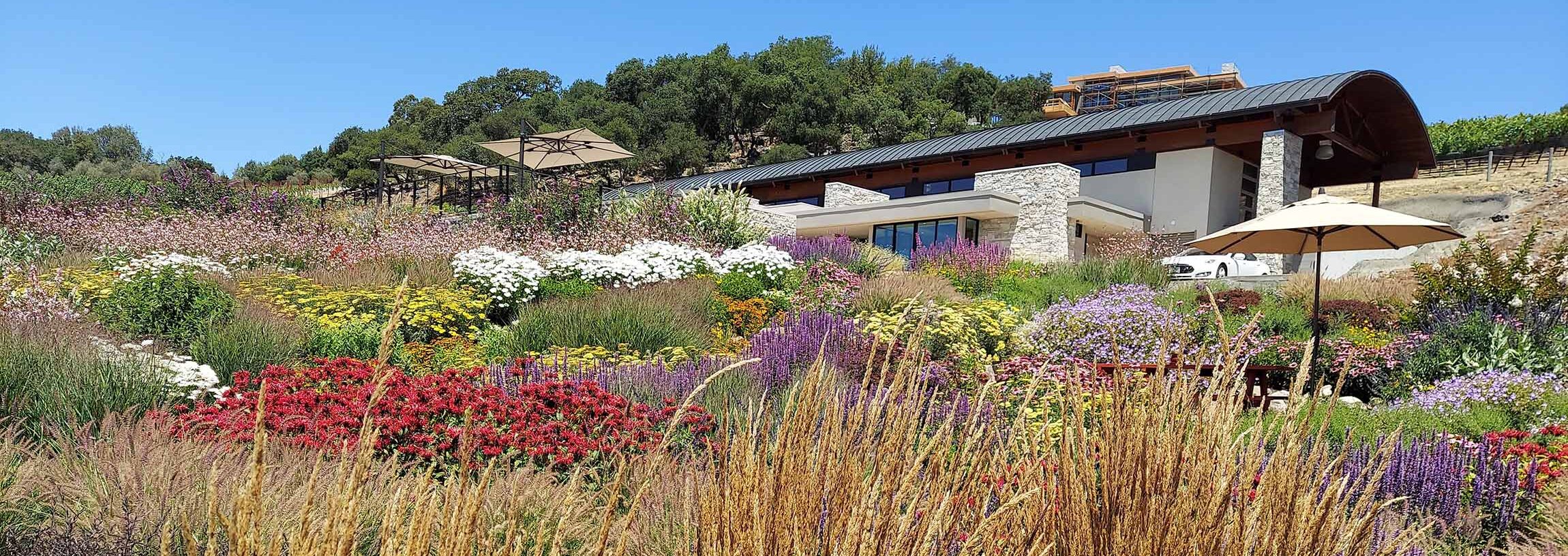
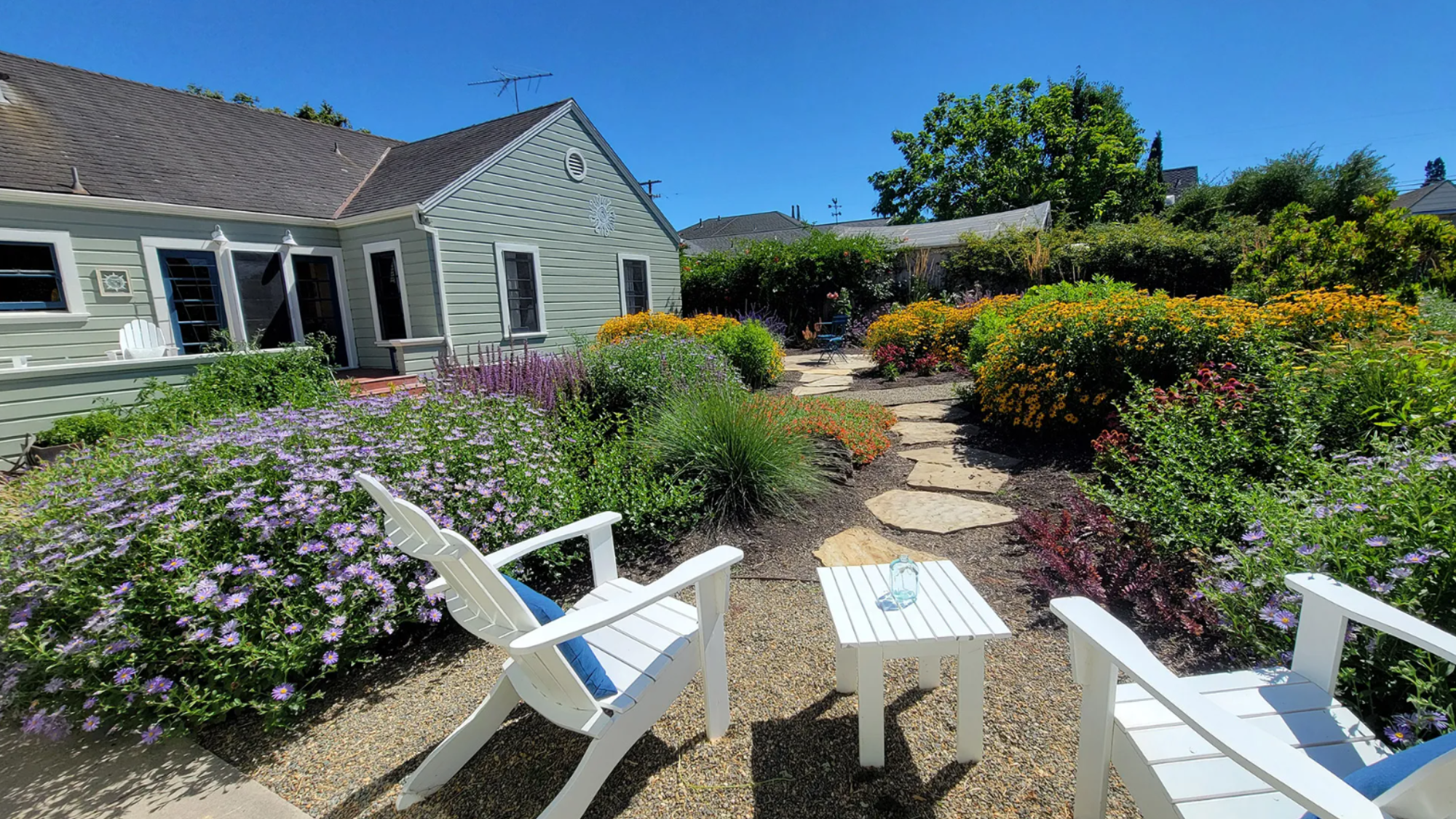
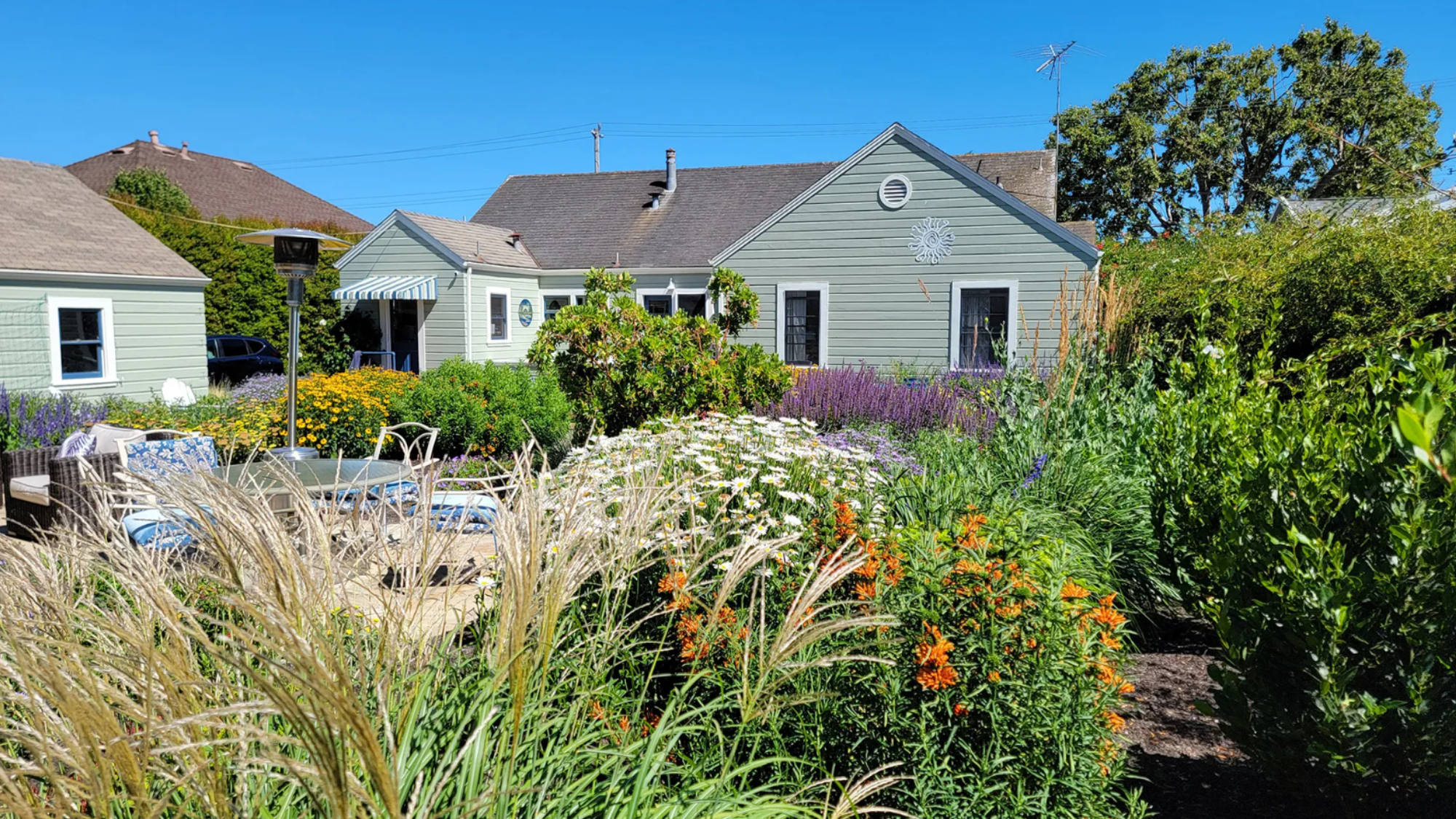
What it became is one of our favorite examples of environmentally friendly landscaping in Sonoma County, a hand-crafted meadowscape buzzing with native pollinators, rich in seasonal color, and designed to benefit not just the homeowner, but the entire neighborhood’s ecosystem.
Here’s how we got there.
Key Takeaways
- Rebuilding depleted soil from the ground up, including beneficial fungi and organic matter, was the foundation for a lasting, low-maintenance landscape.
- Carefully selected California native and climate-adapted plants now support monarch butterflies, hummingbirds, and a wide range of native pollinators year-round.
- Replacing rigid, boxy hardscape with sweeping flagstone paths and circular destination points transformed how the space feels and functions.
The Starting Point: A Backyard That Had Gone Its Own Way
When our lead designer Matt Ripley first walked this site, the picture was clear, and not in a good way.
What We Started With
- Old lawn areas completely overtaken by weeds
- Fruit trees left unpruned and deformed over many seasons
- Scattered ornamental plantings failing to thrive in exhausted soil
- A network of angular concrete paths that divided the space in rigid, uncomfortable ways
The property owners had seen our previous pollinator garden projects and put their full trust in us to start nearly from scratch. That kind of confidence was inspiring and drove us to bring our very best.
Phase One: Clearing the Slate and Rethinking the Layout
The first major decision was what to keep and what to remove.
We pulled out almost all of the existing concrete hardscape, with one exception. A single perimeter walkway connecting the driveway to the garage and back porch was retained for everyday practicality. Everything else came out.
Creating Flow and Destination in the Garden
In place of the old rigid paths, we introduced sweeping curves that gave the space an entirely new energy. The design centered around:
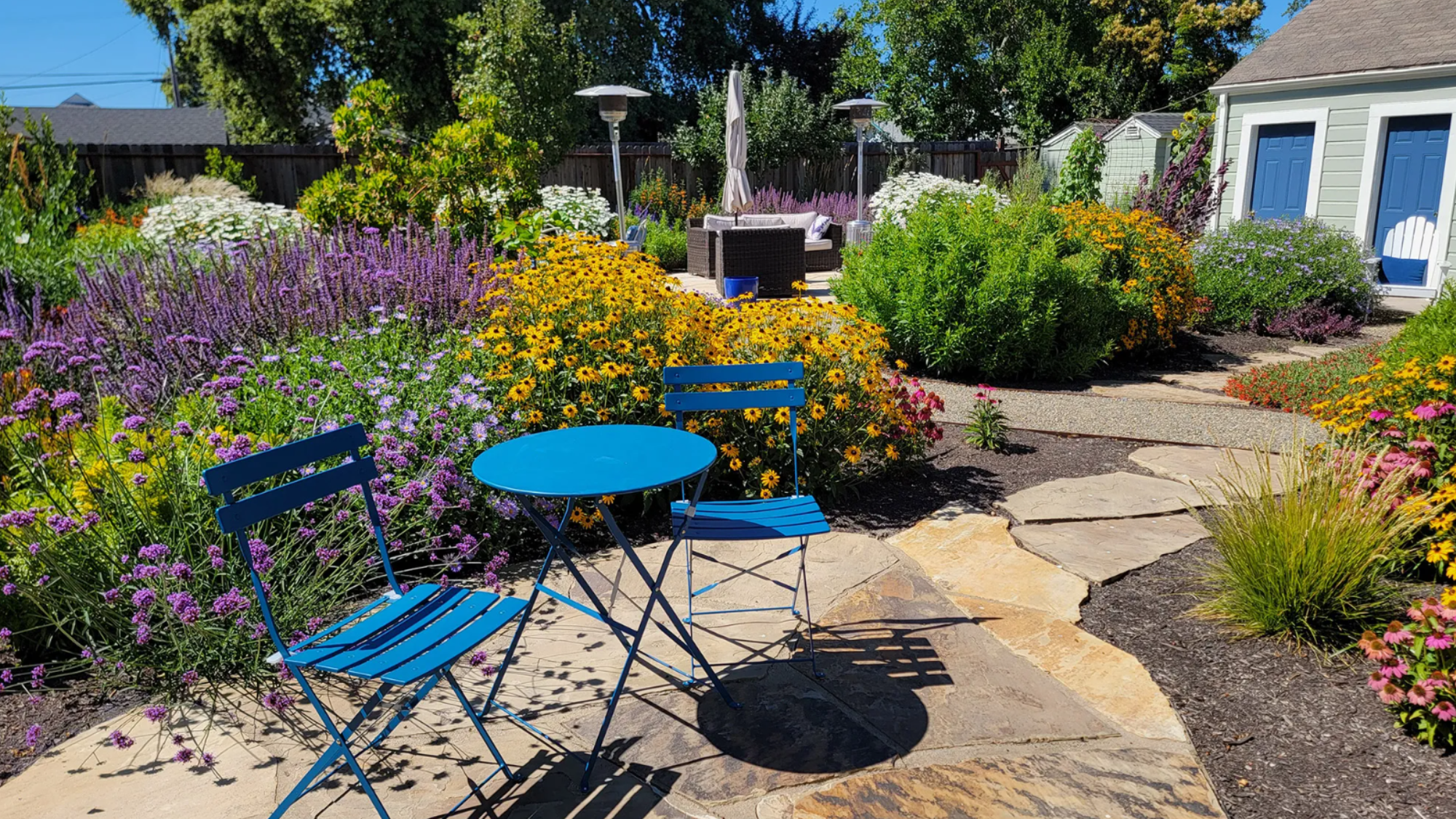
- A central flagstone path running from the back porch deep into the garden, creating a natural spine for the entire layout
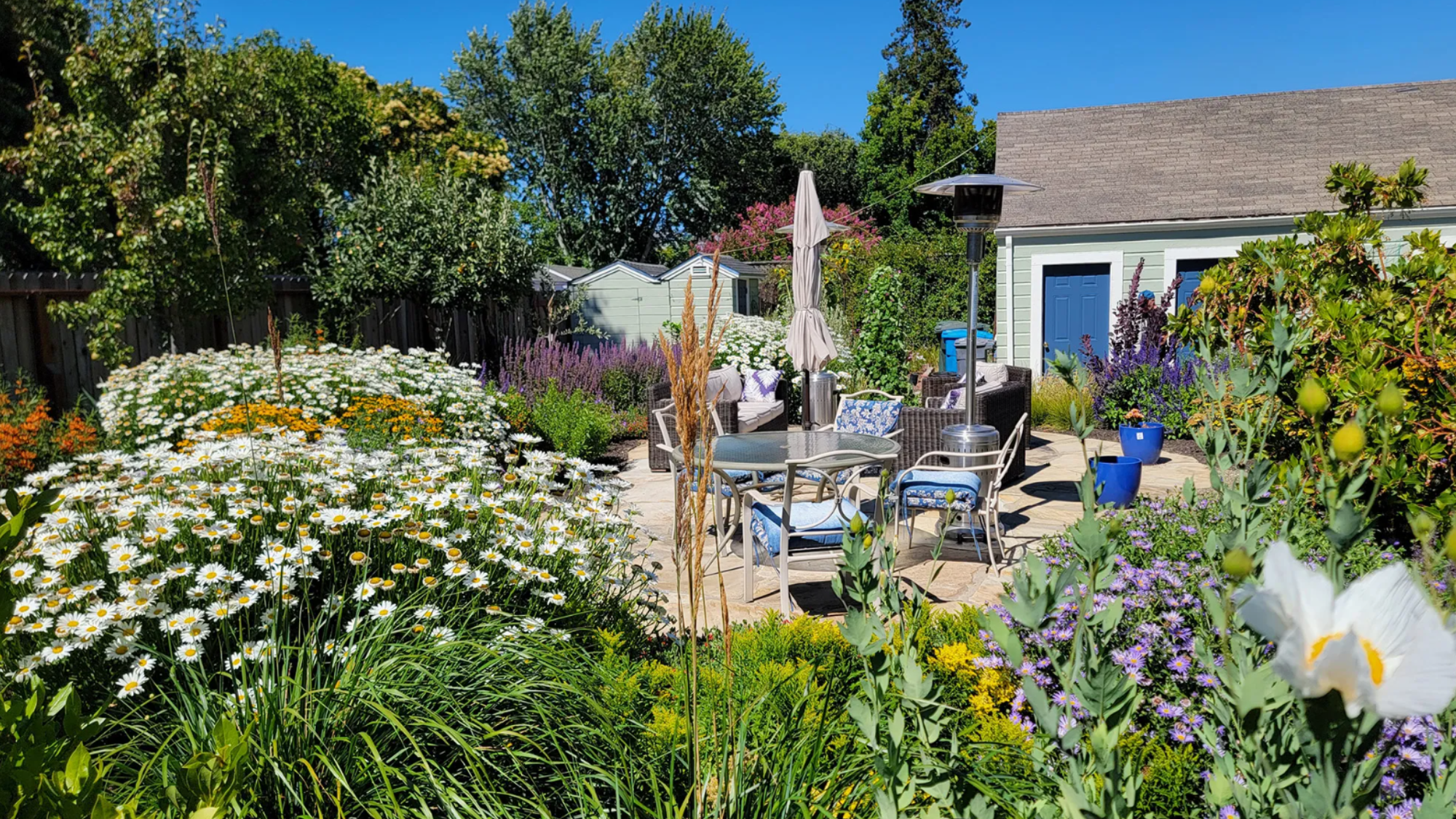
- A large flagstone patio at the far end, spacious enough for both dining and relaxed seating, pulling visitors away from the house and into the garden
- Two smaller circular crushed rock patios along the main path as casual stopping points, places to sit down, slow down, and take the garden in from a different angle
The result is a space that invites exploration. You don’t just view this garden from the porch, you move through it and feel drawn to linger.
Phase Two: Rebuilding the Soil from the Ground Up
Here’s something many property owners don’t fully appreciate: the plants you put in the ground are only as healthy as the soil beneath them.
After years of struggling lawn and invasive weed competition, the soil on this site was depleted, low in organic matter and largely without the biological activity that healthy plants depend on.
What We Did to Fix It
We implemented a custom soil amendment program designed to restore the soil food web. That included:
- Mycorrhizal fungi — beneficial fungi that form networks around plant roots, improving their ability to absorb water and nutrients
- Beneficial bacteria — living microorganisms that break down organic material and make nutrients available to plants
- Rich organic matter — added in meaningful quantities to feed the biological system and improve soil structure
“We thoroughly believe that feeding the soil as a living ecosystem is the key to both near term impact and longevity in a landscape, and the proof is in the results.”
— Matt Ripley, Inspired Landscapes
Phase Three: Choosing Plants That Do More Than Look Beautiful
With the hardscape set and the soil restored, we turned to the planting palette, and this is where the project really came alive.
The goal wasn’t just to fill the space with color. It was to create a functioning ecological network actively supporting pollinators, butterflies, and birds through every season.
California Native Plants Selected for This Project
- Eriogonum fasciculatum (California Buckwheat) — one of the most-visited plants by native pollinators and beneficial insects; a true workhorse in any habitat garden
- Epilobium canum (California Fuchsia) — a hummingbird favorite, producing vivid red-orange blooms in late summer and fall when much else has faded
- Asclepias speciosa (Showy Milkweed) — one of the only food sources for Monarch butterfly caterpillars; essential for supporting this at-risk species
- Ceanothus griseus (Carmel Creeper) — an early-blooming ground cover providing critical food for native bees when little else is available
Climate-Adapted Perennials
Alongside the natives, we wove in climate-adapted perennials that thrive in Sonoma County’s conditions:
- Agastache ‘Purple Haze’, a Tiger Swallowtail butterfly magnet with bold purple flower spikes
- Salvia ‘Mystic Spires’, one of the most consistently visited flowering plants we’ve ever specified, attracting virtually every pollinator type through a long blooming season
- A supporting cast of flowering perennials and ornamental grasses that flow together in our naturalistic impressionist style, layered, dynamic, and alive with movement
The Result: A Garden That Gives Back
The transformation was significant, not just visually, but ecologically.
What the finished landscape delivers:
- Year-round pollinator habitat supporting native bees, butterflies, hummingbirds, and beneficial insects
- Monarch butterfly support through dedicated milkweed plantings, meaningful given declining populations statewide
- Dramatic seasonal color from early spring through late fall, with different species carrying the display as the seasons turn
- Functional outdoor living space with clearly defined areas for dining, gathering, and quiet enjoyment of the garden
- A neighborhood ecological impact, nearby gardens and green spaces benefit from the increased pollinator activity this landscape generates
Neighbors have stopped by just to take it in. And that’s exactly what a good neighborhood garden should do.
Thinking About a Similar Project for Your Property?
If your landscaping is overgrown, underperforming, or simply ready for something new, here’s how to move forward:
- Take stock of what’s there. Note what’s struggling, what’s working, and what you want more of, whether that’s color, wildlife, outdoor living, or all of the above.
- Book a free consultation. We walk your site with you, talk through your goals, and give you an honest read on what the space can become.
- Let us design around your site’s actual conditions. Soil, sun, water availability, and the surrounding environment all shape what will thrive. Our designs are always tailored, never templated.
Ready to See What Your Backyard Could Become?
If this project resonates with you, we’d love to talk. We serve commercial, residential, and estate-level properties throughout Sonoma County, bringing the same care and intention to every project we take on.
Reach out to Inspired Landscapes today!
📞 Call: (707) 395-7474
Frequently Asked Questions
Can you install a pollinator garden on a smaller residential property?
Absolutely. Pollinator and habitat gardens scale remarkably well, some of our most impactful projects have been on modest residential lots. The key is thoughtful plant selection and design, not square footage. If you have good sun exposure and some outdoor space to work with, we can create something meaningful.
Do California native plants require a lot of maintenance once established?
Generally, no, and that’s one of their great strengths. Natives are adapted to our climate and rainfall patterns, so they typically need far less irrigation and upkeep once they’re settled in. The first one to two growing seasons call for some supplemental watering, but after that, most thrive on significantly less water than conventional ornamental plants.
How does soil amendment affect the long-term success of a landscape?
It’s foundational. Soil depleted by weeds, old turf, or compaction doesn’t have the biological activity plants need to thrive. When we rebuild the soil food web (adding beneficial fungi, bacteria, and organic matter) plants establish faster, grow more vigorously, and handle drought or disease stress more reliably. It’s one of the most important investments in any landscape project.
What’s the difference between California native plants and climate-adapted plants?
California natives evolved here and have deep ecological relationships with local insects, birds, and pollinators. Climate-adapted plants come from other Mediterranean-climate regions, parts of Europe, South Africa, Australia, and share similar tolerances for our dry summers and wet winters. We often use both together: natives provide the ecological backbone, and climate-adapted plants round out the palette with additional color, texture, and seasonal performance.
How do I know if my property is a good candidate for a meadowscape or pollinator garden?
The best way to find out is to walk the site with someone who knows plants and soil. Meadowscapes generally do well with good sun exposure and adequate drainage, heavily shaded sites or those with challenging soils may need a different approach or some prep work first. A free consultation gives you a clear picture of what your specific property can support.

Owner, Inspired Landscapes LLC
Matthew Ripley is the owner of Inspired Landscapes LLC, a Healdsburg based landscape design, installation, maintenance, and irrigation firm serving Sonoma County. His work blends horticultural expertise with sustainable practices, drawing creative influence from Sierra backpacking and Sonoma winery estates to craft gardens that invite wildlife and year round color. Client testimonials highlight his design leadership on residential, estate, and winery properties across the region.