




Best Practices to Keep Your Property Safe this Fire-Season
If you own or manage a larger property in Sonoma County, fire season changes how you look at the landscape.
What felt lush in spring can start to feel crowded by summer. Shrubs grow together. Tree canopies get heavier. Dry debris gathers in corners. Perennials and grasses leave behind spent material. And on a large residential estate or commercial site, those small issues can add up quickly.
That is why Sonoma County landscape maintenance during fire season is about more than tidying up. It is about making the property safer, easier to manage, and better prepared for dry conditions, while still keeping it attractive and true to the character of the site.
The good news is that defensible space does not have to mean a bare or lifeless landscape. With the right maintenance approach, you can reduce risk and still keep the property polished, inviting, and visually strong.
At Inspired Landscapes, that balance is part of the work. The company’s approach is grounded in horticultural expertise, sustainable practices, and site-specific planning, with services that include maintenance, irrigation, ornamental pruning, seasonal cleanups, and estate landscape consultation throughout Sonoma County.
Key Takeaways
- Large properties need a proactive fire-season maintenance plan.
- Remove dead material and hidden debris regularly.
- Improve spacing to reduce fuel buildup and restore structure.
- Reduce ladder fuels to limit fire spread into canopies.
- Ongoing cleanup matters more than one-time service.
- Irrigation oversight supports healthier, safer landscapes.
- Defensible space can still look polished and attractive.
Why Bigger Properties Need a Smarter Approach
Large properties bring a different level of complexity.
On a residential estate, you may be managing:
- Long driveways
- Multiple structures
- Pool and patio areas
- Orchards or edible gardens
- Privacy plantings
- Slopes and outlying landscape zones
On a commercial property, the list might include:
- Building entries
- Parking lot islands
- Perimeter beds
- Utility and service areas
- Public-facing gathering spaces
- Long fence lines or access roads
In both cases, there is simply more landscape to monitor and more places where debris, density, and overgrowth can quietly build up.
That is why a good Sonoma County landscape maintenance plan should be strategic, not reactive. You want to know:
- Which areas need attention first
- Where dead material is collecting
- Which plantings are becoming too dense
- Where lower branches or overgrowth are creating ladder fuels
- How to improve safety without making the site feel stripped down
Inspired Landscapes emphasizes analyzing each property’s goals, land, and site conditions to create custom maintenance plans. That kind of tailored thinking matters even more on large, multi-zone properties.
Start With Dead Material Removal
If there is one place to begin, this is it.
Dead material is often one of the biggest fire-season issues on large properties, and it is not always obvious from a quick glance. Most owners notice a fallen branch or a dead shrub, but the real problem is usually the buildup hiding inside otherwise healthy-looking plantings.
That can include:
- Dry leaves inside shrubs
- Spent perennial tops
- Dried ornamental grass blades
- Dead wood buried in shrubs
- Leaf litter under trees
- Dry weeds at edges
- Debris behind structures
- Buildup along fences or in utility areas
This material creates dry fuel, makes maintenance harder, and can hide irrigation issues or structural plant problems.
On larger properties, dead material removal needs to go beyond the obvious front-facing areas. It should also include:
- The backsides of planting beds
- Under mature shrubs
- Beneath tree canopies
- Around detached buildings
- Along road and driveway edges
- Behind retaining walls
- Around service yards and storage zones
This is where professional landscape maintenance becomes especially valuable. Inspired Landscapes’ maintenance services include seasonal cleanups, ornamental pruning, hardscape care, irrigation oversight, and management walkthroughs designed to guide site-specific work.
Spacing Makes the Landscape Safer and Better Looking
When people hear “defensible space,” they often picture a landscape that has been cut back too hard. In reality, good spacing is not about making the property look empty. It is about breaking up continuous fuel paths and giving the landscape room to breathe.
Over time, plantings naturally grow together. Shrubs lose definition. Groundcovers creep into edges. Trees expand into lower planting layers. Bed lines disappear. The whole landscape can start to read as one dense mass.
Thoughtful spacing helps restore structure.
Good spacing can improve:
- Separation between shrubs and trees
- Visibility around entries and paths
- Access for maintenance crews
- Airflow and openness
- Definition between planting zones
- Overall curb appeal
On large properties, spacing should be considered at three levels:
1. Between major planting zones
Different areas of the landscape should not all connect into one continuous wall of vegetation.
2. Between individual plants
Shrubs and small trees often need selective thinning so their form can be seen again.
3. Around structures and activity areas
Entries, patios, buildings, and circulation routes should feel open, clean, and manageable.
This is one of the areas where beauty and function really come together. Inspired Landscapes describes landscape design and management as an artform rooted in horticultural knowledge and sustainable practice, with a focus on outdoor spaces that are both beautiful and functional.
Ladder Fuel Reduction Is a Must
Ladder fuels are the layers of vegetation that can allow fire to move upward from the ground into shrubs and tree canopies. On large properties, these often build gradually and go unnoticed until the landscape has become too dense.
Common examples include:
- Low tree limbs hanging over dry groundcovers
- Volunteer shoots under mature trees
- Dense shrubs planted directly beneath canopies
- Vines climbing through woody plant material
- Overgrown understory around trunks
The goal is not to eliminate all layering. The goal is to create better vertical separation so the landscape has clearer structure and less opportunity for fire to climb.
Ladder fuel reduction often includes:
- Raising lower limbs where appropriate
- Removing volunteer growth
- Thinning understory shrubs
- Clearing dry material from beneath trees
- Pulling back vines or invasive growth
- Opening up crowded layered beds
There is a visual benefit here too. Mature trees look more intentional when their form is visible. Views improve. Plant groupings feel more refined. Maintenance becomes easier because crews can actually access the areas that need care.
Seasonal Cleanup Is Not a One-Time Job
A lot of property owners think of fire-season maintenance as one big cleanup. On larger sites, that approach rarely holds up.
Conditions change all season. New growth flushes in. Older material dries down. Wind moves debris. Irrigation patterns affect plant vigor. One area of the property may need attention weeks before another.
That is why strong Sonoma County landscape maintenance should be approached as an ongoing seasonal process.
A better fire-season routine includes:
- Early-season property review
- Dead material removal
- Selective spacing and pruning
- Ladder fuel reduction
- Mid-season touch-ups
- Continued cleanup after wind or heat events
Without recurring care, large properties tend to look good right after service and then gradually slip back into the same issues.
Inspired Landscapes emphasizes seasonal task planning, regular walkthroughs, and customized horticultural care based on the rhythms of Sonoma County landscapes. That kind of ongoing oversight is exactly what fire-season maintenance requires.
Do Not Overlook Irrigation
Fire-season landscape maintenance is not just about pruning and cleanup. Irrigation plays a major role in how manageable the landscape is during dry months.
On a large property, irrigation problems can quietly create bigger issues:
- Overwatered plants can become overly dense
- Underwatered plants can become stressed and decline
- Leaks can encourage unwanted growth
- Broken emitters can create uneven performance
- Poor scheduling can make maintenance harder all season long
A healthier, more balanced landscape is easier to keep clean, attractive, and properly maintained.
Inspired Landscapes brings strong irrigation expertise to its work, including water management certifications, smart controller programming, audits, repairs, and customized water management planning for different site conditions.
Defensible Space and Beauty Can Coexist
This is the concern many owners have: they want the property to be safer, but they do not want it to look hacked back or harsh.
That concern is valid, especially on larger residential estates and commercial sites where the landscape is part of the property’s identity.
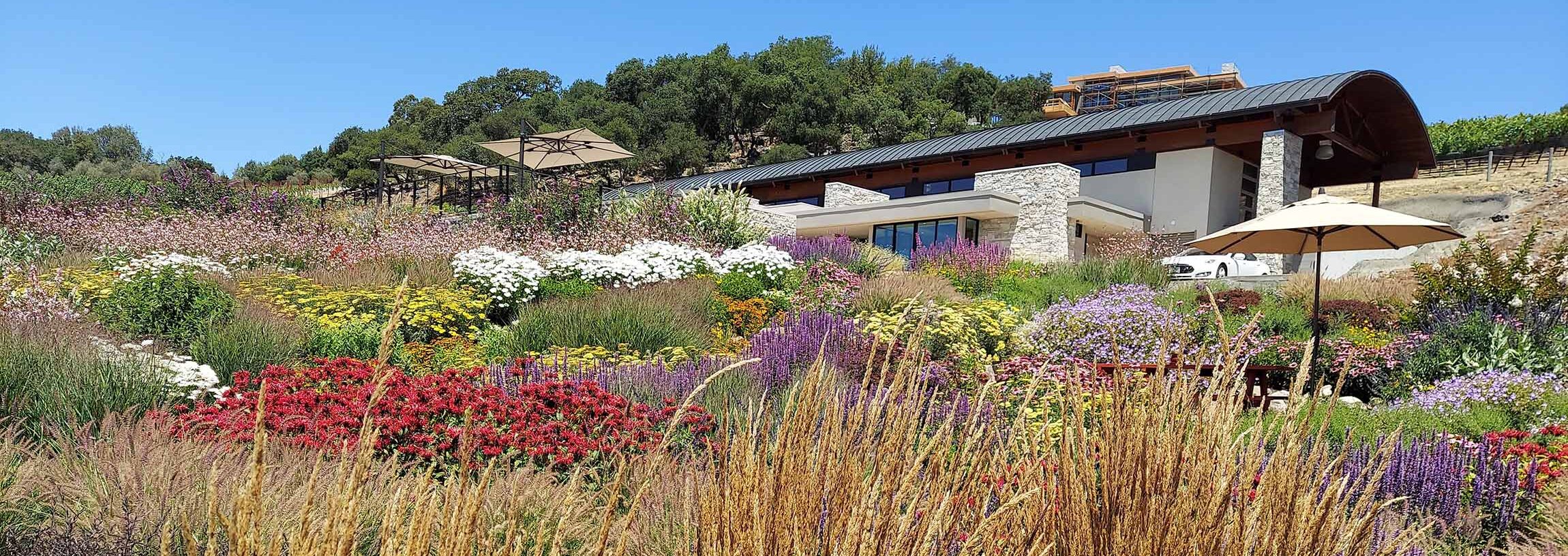
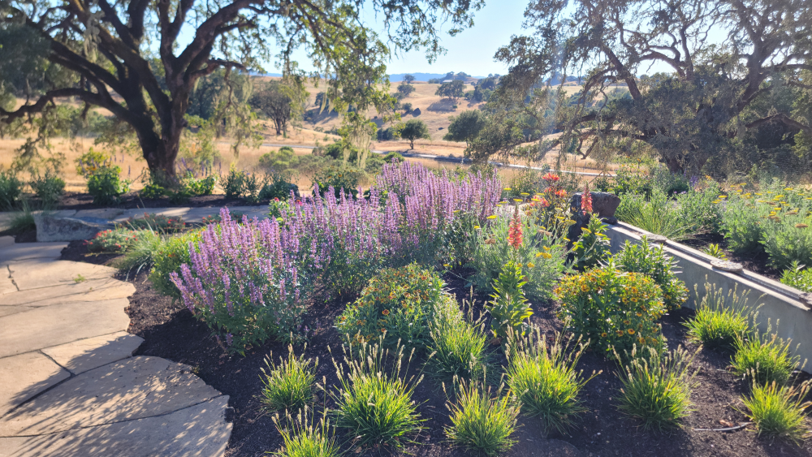
The reality is that defensible space and beauty are not opposites. A beautiful landscape is not created by overgrowth. It comes from structure, health, balance, and careful editing.
Fire-season maintenance can actually improve curb appeal by:
- Revealing the shape of mature shrubs
- Highlighting tree structure
- Cleaning up bed edges
- Improving visibility of architecture and hardscape
- Making entries and paths feel more intentional
- Removing the dry, tired material that makes a site look neglected
Inspired Landscapes’ brand philosophy reflects that balance by focusing on seasonal color, crafted hardscapes, fragrant plantings, and landscapes that are both sensory-rich and functional.
A Simple Way to Prioritize Large Properties
For large residential and commercial sites, it helps to break the landscape into maintenance zones.
A simple zone-based approach:
- High-priority zones: areas around structures, entries, patios, and main circulation routes
- Mid-priority zones: visible ornamental beds, parking islands, gathering areas, and slopes
- Outer zones: fence lines, road shoulders, perimeter plantings, and less frequently used areas
This makes the property easier to manage and helps owners focus effort where it matters most first.
FAQ
What is the biggest fire-season maintenance priority?
Removing dead plant material and debris is one of the most important first steps.
Do large properties need more than a one-time cleanup?
Yes. Larger residential and commercial landscapes usually need ongoing seasonal care, not a single service visit.
What are ladder fuels?
They are layers of vegetation that can let fire move from the ground into shrubs and tree canopies.
Will defensible space make the landscape look bare?
Not when done well. Proper spacing and pruning can improve both safety and curb appeal.
Why does irrigation matter during fire season?
Because overwatering and underwatering can both create maintenance and plant health problems.
How should a large property be prioritized?
Breaking the site into high-, mid-, and outer-priority zones helps owners focus effort where it matters most.
Protect Your Property with Expert Fire-Season Maintenance
The best fire-season landscapes are not bare. They are well edited, well maintained, and thoughtfully managed.
For large residential estates and commercial properties, that means focusing on the essentials:
- Dead material removal
- Better spacing
- Ladder fuel reduction
- Ongoing seasonal cleanup
- Healthy irrigation and horticultural oversight
When those pieces are handled well, the landscape becomes safer, cleaner, and more visually refined at the same time.
Now is the time to get ahead of the season. A professional maintenance plan from Inspired Landscapes can help protect your investment, improve defensible space, and keep your property looking its best through the dry months.
📞 Call: (707) 395-7474

Owner, Inspired Landscapes LLC
Matthew Ripley is the owner of Inspired Landscapes LLC, a Healdsburg based landscape design, installation, maintenance, and irrigation firm serving Sonoma County. His work blends horticultural expertise with sustainable practices, drawing creative influence from Sierra backpacking and Sonoma winery estates to craft gardens that invite wildlife and year round color. Client testimonials highlight his design leadership on residential, estate, and winery properties across the region.