




How to Prevent Runoff on Commercial Landscaping?
If you own or manage a commercial property in Sonoma County, drainage issues usually don’t stay minor for long.
A little puddling near an entrance can turn into muddy beds, washed-out slopes, stained pavement, stressed plants, and ongoing maintenance costs. Once winter storms roll in, all those weak spots show up fast.
That’s why drainage matters so much in sustainable landscaping.
It’s not just about getting water off a property as fast as possible. It’s about slowing it down, guiding it where it should go, helping the soil absorb what it can, and creating a landscape that works with the site instead of constantly fighting it.
For commercial owners searching for landscapers near me in Sonoma County, that matters. You don’t just want a company that can make a property look polished. You want a team that understands how water moves, how slopes behave, how plant roots stabilize soil, and how sustainable landscape choices can prevent runoff problems before they become expensive ones.
Inspired Landscapes is built around that kind of thinking. The company brings Sonoma County experience in landscape design, installation, maintenance, irrigation, water management, and sustainable horticultural practices, with a focus on creating custom landscapes that are both beautiful and functional.
Key Takeaways
- Poor drainage can lead to erosion, plant stress, pavement damage, and higher maintenance costs.
- Sustainable landscaping helps slow, direct, and absorb stormwater more effectively.
- Slope planting with deep-rooted, site-appropriate plants helps stabilize soil and reduce washout.
- Healthy root systems improve infiltration and support long-term drainage performance.
- Swales can capture and redirect runoff while blending into the overall landscape design.
- The best runoff solutions usually combine grading, planting, soil improvements, drainage features, and irrigation updates.
- For Sonoma County commercial properties, drainage planning should be part of the full landscape strategy.
Why Drainage Matters on Commercial Properties
Commercial landscapes have to do a lot at once.
They need to look professional, feel safe, hold up through the seasons, and stay manageable from a maintenance and budget standpoint. When drainage is poor, everything starts working harder than it should.
Common Signs of Drainage Trouble
- Water pooling near entrances or sidewalks
- Slippery pavement and safety concerns
- Soil and mulch washing out of planting beds
- Soggy lawn or oversaturated roots
- Erosion on slopes and embankments
- Messy-looking common areas after storms
- Damage to curbs, walkways, and hardscape edges
Usually, these issues aren’t random. Water is just following the path the site gives it. If grading is off, soil is compacted, planting is too sparse, or irrigation is already keeping the site too wet, runoff problems start showing up all over the property.
A sustainable landscape takes a different approach. Instead of reacting to drainage problems after the fact, it helps prevent them by making water management part of the design from the beginning.
Start with Stormwater Flow
Before runoff can be fixed, you have to understand where the water is actually going.
That sounds simple, but it’s where a lot of properties go wrong. Water doesn’t come from one place. On a commercial site, it may be moving off roofs, across parking lots, down drive aisles, through compacted turf, and into planting beds that were never designed to handle that kind of flow.
Common Sources of Stormwater Pressure
- Roof runoff and downspouts
- Large paved areas like lots and walkways
- Sloped entrances and embankments
- Compacted soils that don’t absorb water well
- Poor transitions between hardscape and planting areas
- Irrigation systems that are already overwatering
Slope Planting Does More Than Make Hills Look Better
If your property has any kind of slope, drainage is a big part of whether that area stays attractive or starts falling apart.
This is where slope planting becomes one of the smartest tools in sustainable landscaping.
Done right, slope planting helps:
- Hold soil in place
- Break up the force of moving water
- Reduce erosion
- Cover vulnerable ground
- Make difficult areas look intentional and finished
But this only works if the plants are chosen and arranged with purpose. A slope can’t just be filled with random greenery and expected to perform.
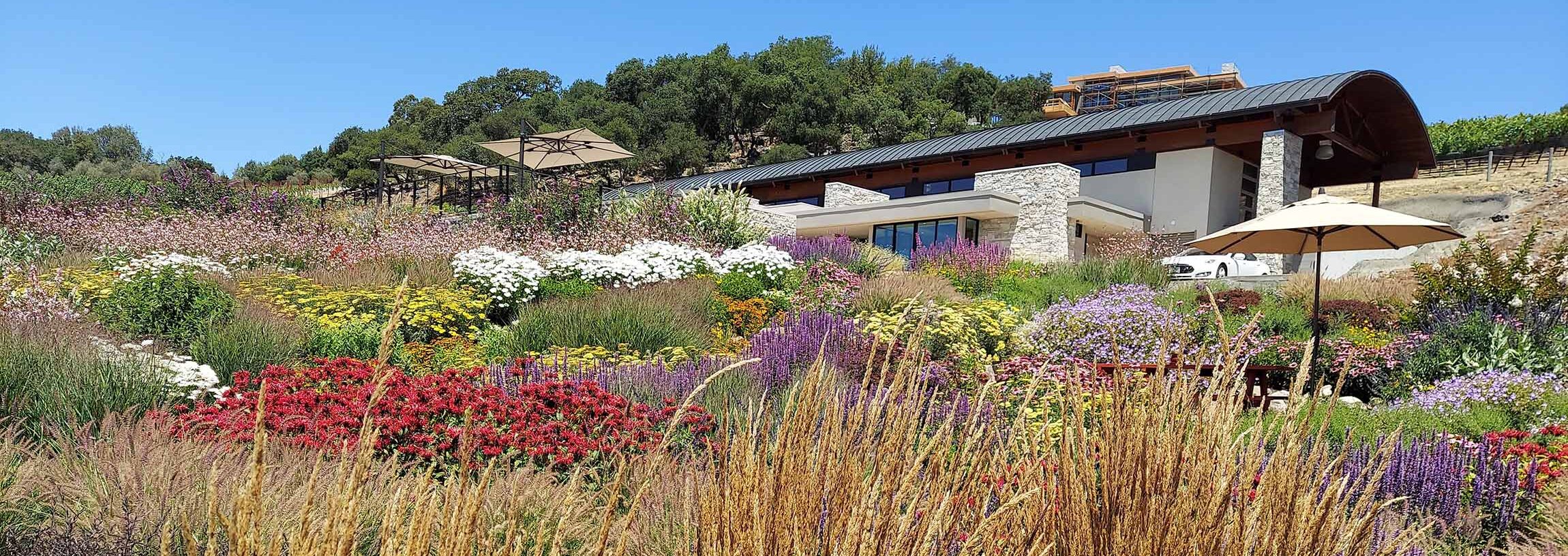
Good slope planting usually includes a mix of deep-rooted shrubs, spreading groundcovers, ornamental grasses, and site-appropriate plants that can handle Sonoma County conditions. Some plants stabilize upper soil layers. Some spread to close gaps. Some build a stronger root network over time.
Spacing matters too. If there are too many open areas, water will find them. And once runoff starts cutting channels into a slope, the problem tends to get worse every season.
For commercial properties, this matters around office campuses, retail centers, winery landscapes, roadside embankments, monument signage, and shared-use spaces where first impressions count.
Root Structures are Doing a Lot of the Real Work
One of the most important parts of drainage is also the easiest to miss because it’s underground.
People notice flowers, foliage, mulch, and overall appearance. What they don’t see is the root structure below the surface. And in a sustainable landscape, that’s where a lot of drainage performance comes from.
What Healthy Root Systems Help With
- Stabilize soil
- Reduce erosion
- Improve infiltration
- Support better soil structure
- Keep planting beds from turning into runoff zones
Different plants do different jobs. Fibrous-rooted grasses can help grip surface soil. Shrubs can create wider stabilization zones. Trees, when selected and placed correctly, can contribute to stronger soil ecology and better water movement.
This is one of the biggest differences between a landscape that’s purely decorative and one that’s built to perform. A decorative planting may look good for a season. A landscape built around root health does more over time. It handles rain better, stabilizes slopes better, and supports a healthier site overall.
Inspired Landscapes emphasizes horticultural expertise, sustainable practices, and site analysis in both design and ongoing maintenance, which is exactly what’s needed when drainage and plant performance are closely connected.
Swales Are One of the Smartest Drainage Tools
Swales don’t always get enough attention, but they can make a huge difference on commercial properties.
A swale is a shallow, shaped channel in the landscape that collects and guides water. In a sustainable landscape, it does more than move runoff. It slows water down, spreads it out, and can help more of it soak into the soil instead of rushing across pavement.
That’s especially useful on sites with large hard surfaces and vulnerable planting areas.
Swales can help:
- Catch runoff before it reaches buildings
- Slow fast-moving stormwater
- Reduce erosion in problem areas
- Support infiltration in landscape zones
- Create a softer alternative to relying only on underground piping
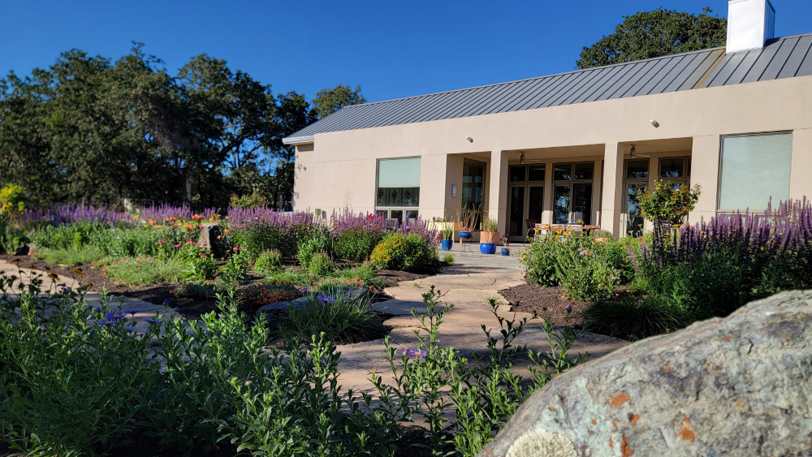
They can work well along parking lot edges, in medians, at the base of slopes, in perimeter beds, and in open spaces between hardscape and structures.
The best part is that a swale doesn’t have to feel like a utility feature. It can be integrated into the overall look of the property so it still feels polished and well-designed.
For commercial owners looking up landscapers near me in Sonoma County, this is one of those things worth asking about. A team that understands sustainable drainage will see swales as part of the landscape system, not as an afterthought.
Drainage Improvements Work Best Together
Most drainage problems don’t come from just one issue, so the best solutions usually involve more than one improvement.
That might mean:
- Regrading low areas where water collects
- Improving soil so beds absorb water better
- Reshaping or adding swales
- Strengthening planting with better root systems
- Stabilizing slopes with more appropriate plant choices
- Redirecting downspouts more effectively
- Adding creek-bed style drainage features
- Supporting grade changes with retaining elements
- Updating irrigation so the site isn’t already oversaturated
And that irrigation piece matters more than people realize.
How Sustainable Landscapes Prevent Runoff Problems
The best runoff control is proactive.
A sustainable landscape reduces runoff by building a system where every part of the site supports better water behavior. Grading directs flow. Slope planting stabilizes soil. Root structures improve infiltration. Swales intercept runoff. Soil and mulch practices reduce washout. Irrigation is tuned to actual plant need instead of overwatering by default.
That kind of system doesn’t just help during one storm. It improves long-term site performance.
For commercial owners, the benefits are practical:
- Better appearance during wet weather
- Fewer erosion and washout issues
- Healthier planting beds
- Less stress on hardscape and infrastructure
- Lower long-term maintenance pressure
- A property that feels more resilient and better managed
It also helps align the landscape with broader sustainability goals, which matters more and more for commercial properties trying to balance presentation, water conservation, and responsible site management.
What Sonoma County Commercial Owners Should Look For
If your property has recurring runoff, erosion, or drainage trouble, the goal shouldn’t be a quick patch.
You want a landscape partner who understands how all the pieces connect:
- Stormwater flow
- Slope planting
- Root structures
- Swales
- Irrigation efficiency
- Soil conditions
- Long-term maintenance
That’s what makes sustainable drainage so effective. It looks at the whole picture.
Drainage problems are frustrating, but they’re also useful. They tell you something about how the site is functioning.
FAQ
What causes runoff problems on commercial properties?
Runoff often comes from poor grading, compacted soil, large paved areas, slope erosion, and overwatering.
How does sustainable landscaping help prevent runoff?
It manages water more naturally through better grading, root support, soil health, drainage features, and efficient irrigation.
What plants help reduce erosion on slopes?
Deep-rooted shrubs, spreading groundcovers, and ornamental grasses are often used to help stabilize soil.
What is a swale in landscaping?
A swale is a shallow channel that helps collect, slow, and guide stormwater through the landscape.
Can irrigation make runoff worse?
Yes. Overwatering can oversaturate soil and add to drainage issues, especially during wet periods.
Let’s Rethink Your Property Drainage – Inspired Landscapes
Maybe water is moving too fast. Maybe the slope isn’t planted strongly enough. Maybe root structures aren’t doing enough underground. Maybe irrigation is adding to the problem. Maybe the property needs swales, regrading, or a broader drainage upgrade.
Usually, it’s a mix of things.
That’s why sustainable landscaping works so well. It doesn’t just hide the symptoms. It addresses the way water, soil, planting, and infrastructure all interact.
So if you’re comparing landscapers near me in Sonoma County, Inspired Landscapes has a team that understands drainage as part of the full landscape system.
Contact Inspired Landscapes today to schedule a consultation and see how sustainable drainage improvements can strengthen your commercial landscape.
📞 Call: (707) 395-7474

Owner, Inspired Landscapes LLC
Matthew Ripley is the owner of Inspired Landscapes LLC, a Healdsburg based landscape design, installation, maintenance, and irrigation firm serving Sonoma County. His work blends horticultural expertise with sustainable practices, drawing creative influence from Sierra backpacking and Sonoma winery estates to craft gardens that invite wildlife and year round color. Client testimonials highlight his design leadership on residential, estate, and winery properties across the region.