




Which Hardscaping Materials Work Best in Sonoma County?
Sonoma County asks a lot of a patio or path. Between baking summer sun, occasional heavy winter storms, and the need to keep landscaping fire-wise, the wrong material can mean cracking, fading, or a costly redo. If you’ve been searching for hardscape contractors near me in Sonoma County, you’ve likely sensed that not every material, or installer, is built for our conditions. Here are five options that consistently perform well here, plus the tradeoffs worth knowing before you commit.
Key Takeaways
- Sonoma’s hot, dry summers and wildfire risk make material choice as important as design.
- Flagstone and pavers are local favorites, each with different upkeep needs.
- Permeable materials help manage winter runoff and support water-efficiency goals.
- Cost, drainage, and maintenance vary widely, there’s no single “best” material.
- A contractor who knows Sonoma’s soils and fire codes can help you avoid costly mistakes.
Why Sonoma County’s Climate Changes the Equation
Sonoma County’s Mediterranean climate means long, dry summers followed by mild, wet winters that can bring heavy rain in short bursts. Add in the wildfire risk that comes with living near open hillsides or wooded lots, and hardscape stops being a purely aesthetic decision.
We evaluated each material below on four local factors:
- Heat and drought tolerance
- Drainage performance during winter storms
- Fire-area suitability
- Realistic upkeep.
1. Flagstone: A Sonoma Classic for Good Reason
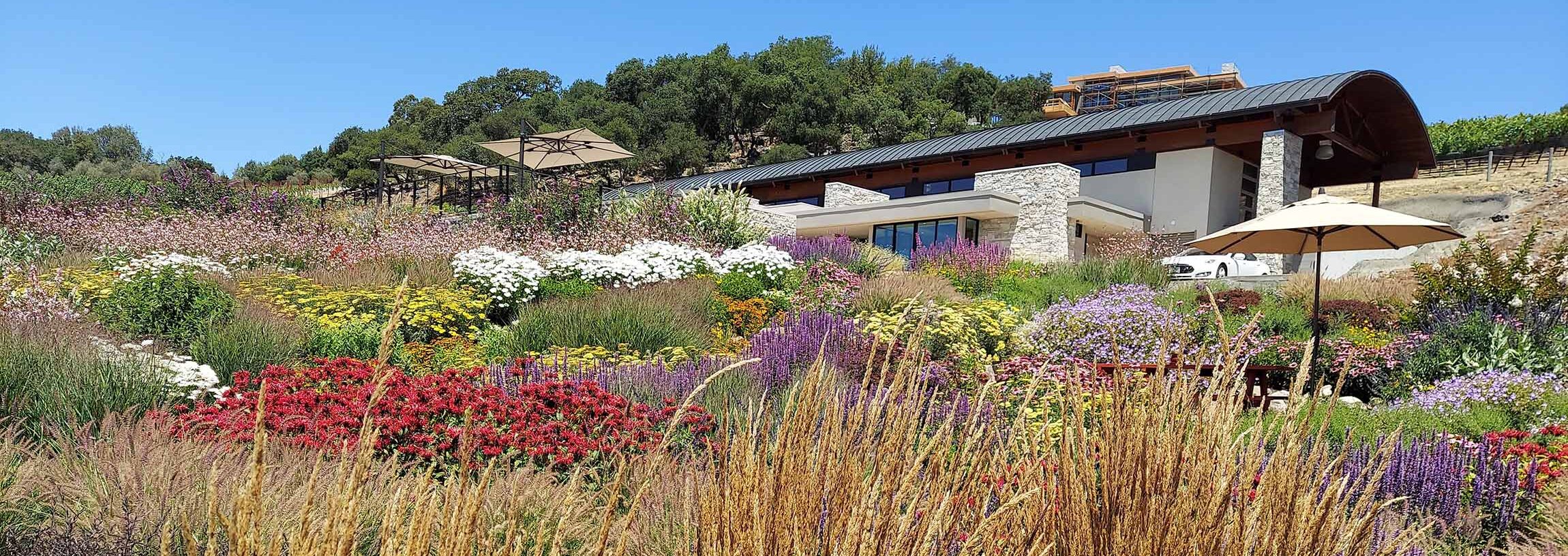
Flagstone is irregular, quarried stone typically laid as patio or walkway paving. It’s a favorite across Sonoma’s wineries and estates because it holds its color in full sun and pairs naturally with native plantings.
- Handles heat well without fading or softening
- Non-combustible, a smart choice near structures in fire-prone areas
- Can be set with permeable joints for better winter drainage
Why It Matters: Flagstone needs periodic joint maintenance and occasional resealing, so it suits homeowners who want a natural look and don’t mind some upkeep.
2. Concrete & Permeable Pavers: Flexible and Drainage-Friendly
Pavers are individual units of concrete or clay laid in a pattern, one of the most requested hardscape options for patios, driveways, and walkways. Permeable versions use special spacing and a gravel base to let water soak through instead of running off.
- Wide range of colors, shapes, and patterns to match a home’s style
- Permeable options help manage Sonoma’s heavier winter storms
- Individual units can be replaced if damaged, without redoing the surface
Pro Tip: Ask about permeable paver systems if meeting water-efficiency or stormwater guidelines is part of your goal.
3. Poured & Stamped Concrete: Straightforward and Low-Fuss
Poured concrete is mixed on-site and set as a solid slab, while stamped concrete adds texture to mimic stone or brick at a lower cost. It’s a practical fit for driveways, pool decks, and larger patios.
- Generally more budget-friendly than natural stone for large areas
- Non-combustible and a solid choice for fire-conscious property lines
- Can crack over time with soil movement without proper base prep
Heads Up: Concrete’s biggest vulnerability is drainage, without the right slope and base, it can crack or pool water. Site prep matters more than the material itself.
4. Gravel & Decomposed Granite: Permeable and Fire-Wise
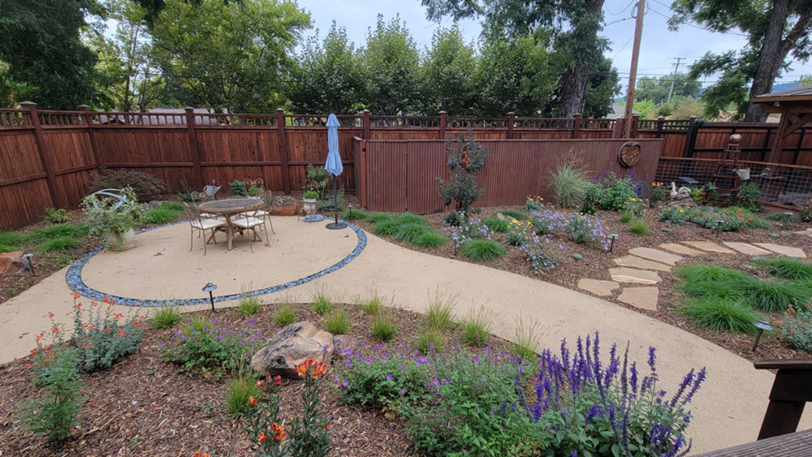
Decomposed granite, often called “DG,” is crushed granite that compacts into a firm, natural-looking surface. Along with loose gravel, it’s popular for pathways, seating areas, and the defensible space zones many Sonoma properties need to maintain.
- Naturally permeable, helping with drainage and groundwater recharge
- Used in fire-wise landscaping since it doesn’t carry flame like mulch or bark
- More affordable upfront than paved surfaces, with easy repairs if it shifts
Safety note: Material choice is one piece of defensible space planning, not a substitute for it. Confirm local fire codes and clearance requirements for your specific property.
5. Natural Stone Veneer: The Finishing Touch for Walls and Features
Stone veneer is a thin layer of natural or manufactured stone applied over retaining walls, fire pits, or seating walls, less about walkable surface and more about tying a hardscape together visually.
- Adds texture and warmth to retaining walls, outdoor kitchens, and fire features
- Pairs well with flagstone or pavers for a cohesive, layered look
- Durable in Sonoma’s climate, with minimal upkeep once installed
Why It Matters: This is often the detail that elevates a functional hardscape into a designed outdoor space, especially on estate and winery-style properties.
Why Local Expertise Matters When Choosing Hardscape Contractors in Sonoma County
Picking a material is only half the equation, how it’s installed determines whether it holds up. Base prep, drainage planning, and fire-code awareness vary by site and are easy to get wrong without local experience.
Our team at Inspired Landscapes brings that knowledge to every hardscape project:
- Installation leaders with a decade or more of hands-on flagstone and paver experience
- QWEL and CLCA Certified Water Manager credentials guiding our drainage planning
- Firm bids with every element analyzed upfront, no runaway costs mid-project
- 15+ years designing and installing landscapes across Sonoma and Napa County
We treat hardscape as part of the whole landscape, tying material choices back to your site’s drainage, sun exposure, and long-term water and fire-safety goals.
Let’s Build a Hardscape That’s Made for Sonoma County
Choosing the right material is easier with someone who’s installed it here before, in this soil and climate, on properties like yours. We’re happy to walk your site and talk through what will actually hold up.
Reach out to Inspired Landscapes today!
📞 Call: (707) 395-7474
Frequently Asked Questions
What’s the most fire-resistant hardscape material for Sonoma County homes?
Non-combustible materials like flagstone, concrete, pavers, and decomposed granite are all common in fire-conscious landscaping. The right choice depends on your specific defensible space requirements.
Do permeable pavers actually help with drought and water rules?
Permeable pavers let rainwater soak into the ground instead of running off, supporting groundwater recharge and local water-efficiency goals. They’re often a good fit for properties working toward MWELO (Model Water Efficient Landscape Ordinance) compliance.
How much maintenance does flagstone need compared to pavers?
Flagstone typically needs periodic joint maintenance and occasional resealing, while pavers are generally lower-maintenance and easier to spot-repair. Both are durable, long-term options.
Can hardscaping really affect my water-efficiency compliance?
Yes, permeable surfaces and drainage planning are often part of a broader hydrozone and irrigation strategy used to meet water-use requirements.
How do I find hardscape contractors near me in Sonoma County I can trust?
Look for local project experience, relevant water and horticulture certifications, and a process with clear, upfront pricing. A free consultation and site walk is usually the easiest way to gauge fit.
How do I know which material is right for my property?
It typically comes down to your site’s drainage, sun exposure, fire-risk zone, and the look you’re going for. A site walk with an experienced designer is the most reliable way to match material to conditions.

Owner, Inspired Landscapes LLC
Matthew Ripley is the owner of Inspired Landscapes LLC, a Healdsburg based landscape design, installation, maintenance, and irrigation firm serving Sonoma County. His work blends horticultural expertise with sustainable practices, drawing creative influence from Sierra backpacking and Sonoma winery estates to craft gardens that invite wildlife and year round color. Client testimonials highlight his design leadership on residential, estate, and winery properties across the region.